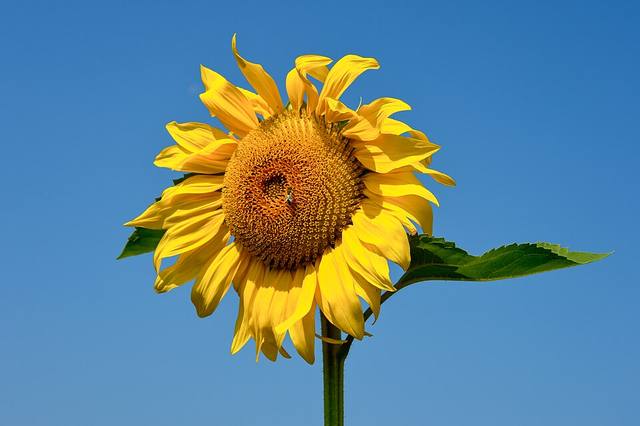
Photo: Johann Jaritz · CC BY-SA 4.0 · Wikimedia Commons

Sunflower
Helianthus annuus
Also called Common sunflower, Annual sunflower
Garden flower · Family Asteraceae · Native to North America
A tall annual with huge yellow flower heads that follow the sun when young. It is grown for cut flowers, birds and edible seeds.
Not on the ASPCA's list: keep it out of reach of pets.
Care
Light
Full sun
Full sun, at least 6 to 8 hours a day. In shade it grows thin and lean toward the light.
Water
About every 5 days in the growing season, every 14 in the cool season
Water deeply once or twice a week so the long taproot goes down. Young plants need steady water; established plants cope with dry spells.
Water when the top 5 cm (2 in) of soil is dry
Humidity
Medium humidity
Average humidity is fine. Good air flow prevents mildew in humid regions.
Temperature
18 to 30 °C (64 to 86 °F)
Best at 18 to 30 °C (64 to 86 °F). Seedlings are damaged by frost, below about 4 °C (39 °F).
Soil
Deep, well-drained soil, pH 6 to 7.5. Dig deep and add compost. In pots use a deep container, 30 cm (12 in) or more.
Feeding
Little feeding needed; add compost before planting. A mid-season feed helps tall types in poor soil.
Repotting
An annual. It dislikes root disturbance, so sow straight where it will grow or move seedlings very young.
Pruning
No pruning. Tall single-stem types are cut at the flower. Branching types give more flowers if you pinch the tip when young.
Propagation
Sow seed 2.5 cm (1 in) deep, 15 to 30 cm (6 to 12 in) apart, after the last frost. Seeds sprout in about 10 days.
Size
60 to 365 cm (24 to 144 in)
Fast growing
Outdoors
USDA zones 2 to 11
Grown as a summer annual in full sun, in shelter from strong wind. Tall types need staking.
Eating
Seeds and young buds
Pick seeds when the head is ripe and dry; the husks are not for eating.
Common problems
Leaning or toppling
Wind or weak soil
Stake tall plants and plant in a sheltered place.
Seeds eaten by birds
Birds and squirrels
Cover heads with mesh as they ripen.
White powdery leaves
Powdery mildew
Space plants and avoid wetting leaves.
Chewed leaves
Slugs, snails or caterpillars
Protect seedlings and remove pests by hand.
No seeds in the head
Poor pollination or cold
Plant in sun and avoid spraying flowers.
Did you know?
A sunflower head is not one flower but hundreds of tiny ones, arranged in spirals that follow Fibonacci numbers. Young heads track the sun across the sky.
General care information for a typical plant. Conditions in your home or garden may need a different rhythm.
Not sure what your plant is?
Identify a plant from a photoSee this guide in the appKagn Plants also keeps your own plants with watering reminders, and its plant doctor reads what is wrong with one.
Updated 22 November 2026.