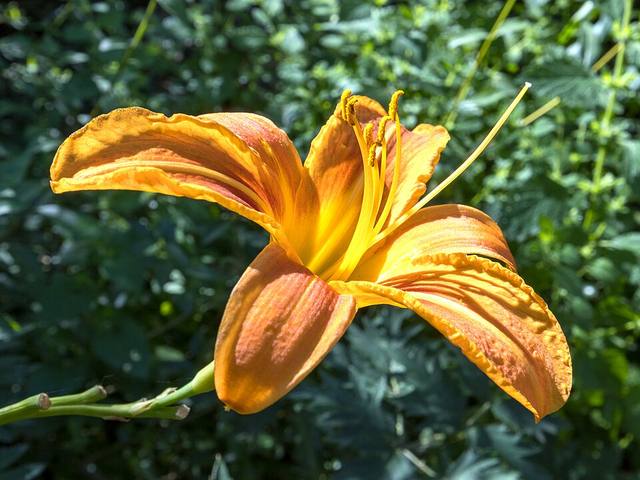
Photo: JackyM59 · CC BY-SA 4.0 · Wikimedia Commons

Daylily
Hemerocallis fulva
Also called Orange daylily, Ditch lily, Tawny daylily, Common daylily
Garden flower · Family Asphodelaceae · Native to China, Korea and Japan
A tough clump-forming perennial with orange trumpet flowers that each last one day, with new buds opening for weeks. It grows almost anywhere and spreads by roots.
Toxic to cats
Toxic principle: Unknown
Signs: Cats: vomiting, inappetence, lethargy, kidney failure, death.
Care
Light
Full sun
Full sun, 6 or more hours, for the most flowers. It tolerates part shade but flowers less.
Water
About every 7 days in the growing season, every 30 in the cool season
Water deeply once a week in dry weather. Established plants are very tough. More water gives more flower. It dies back in winter, when watering is rarely needed.
Water when the top 5 cm (2 in) of soil is dry
Humidity
Low humidity
Outdoor humidity is no concern.
Temperature
10 to 30 °C (50 to 86 °F)
Hardy to about -34 °C (-30 °F). Best at 10 to 30 °C (50 to 86 °F). It handles heat well.
Soil
Any reasonably drained soil. It tolerates clay, drought and poor soil. Neutral to slightly acid.
Feeding
Every 6 weeks in the growing season
Feed every 6 weeks in spring and early summer with a balanced feed, or none for a plant on good soil.
Repotting
Every 4 years
Divide every 3 to 5 years in spring or autumn when flowering drops. Divisions grow quickly.
Pruning
Remove spent flower stalks. Cut leaves to 5 cm (2 in) when they turn brown in autumn. Remove yellow leaves in summer.
Propagation
Divide the clump in spring or autumn using a sharp spade. Each division with 2 to 3 fans of leaves and roots will grow.
Size
60 to 120 cm (24 to 47 in)
Medium growth
Outdoors
USDA zones 3 to 9
Hardy in zones 3 to 9. It spreads by runners and can be invasive in some places. Space plants 45 to 60 cm (18 to 24 in) apart.
Common problems
Plant spreads where it is not wanted
Runners and old roots
Dig out unwanted clumps, removing all the roots. Choose clumping types.
Few flowers
Too much shade or crowding
Move to full sun and divide old clumps.
Leaves turn yellow in summer
Heat, drought or natural die-back
Water and cut off yellow leaves.
Buds fall off or look swollen
Gall midge
Remove and bin swollen buds.
Orange pustules on leaves
Daylily rust
Cut off affected leaves and bin them; clear litter in autumn.
Did you know?
Each daylily flower lasts one day, which gives Hemerocallis its name, from the Greek for 'beauty for a day'.
General care information for a typical plant. Conditions in your home or garden may need a different rhythm.
Not sure what your plant is?
Identify a plant from a photoSee this guide in the appKagn Plants also keeps your own plants with watering reminders, and its plant doctor reads what is wrong with one.
Updated 22 November 2026.