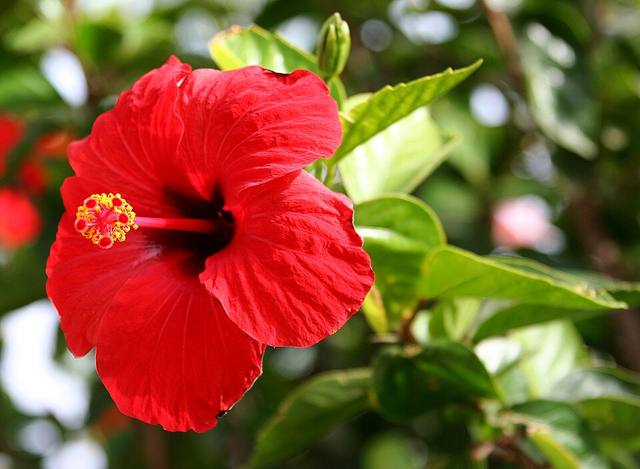
Photo: Andy / Andrew Fogg from near Cambridge, UK · CC BY 2.0 · Wikimedia Commons

Chinese hibiscus
Hibiscus rosa-sinensis
Also called Tropical hibiscus, Rose of China, Shoeblack plant
Houseplant · Family Malvaceae · Native to Tropical Asia (exact origin uncertain, long cultivated)
A glossy shrub with large, showy flowers in red, pink, orange or yellow, each lasting a day or two. It does well in a bright, warm room or outdoors in summer.
Not on the ASPCA's list: keep it out of reach of pets.
Care
Light
Full sun
Give it the brightest spot, with some direct sun. Too little light gives lots of leaves and few buds. Buds that drop before opening often mean low light or a sudden move.
Water
About every 4 days in the growing season, every 10 in the cool season
Water well in the growing season: it is thirsty in flower and wilts fast in hot sun. Water less in winter. Soggy soil or a dry-out both make buds and leaves drop.
Water when the top 2 to 3 cm (1 in) of soil is dry
Humidity
Medium humidity
Normal home air is fine. Dry air with heating invites spider mites, so check under leaves.
Temperature
16 to 30 °C (61 to 86 °F)
Grows well at 16 to 30 °C (61 to 86 °F). It is damaged below about 10 °C (50 °F) and drops leaves in cold draughts.
Soil
A loose, rich potting mix that drains well, with some bark or perlite. A slightly acidic pH around 6 to 6.5 is best.
Feeding
Every 2 weeks in the growing season
Feed every 2 weeks from spring to early autumn with a feed that is high in potassium. Stop in winter.
Repotting
Every 2 years
Repot every 2 years in spring, one size up. It flowers best when slightly root-bound, so do not over-pot.
Pruning
Cut back by a third in early spring to keep it bushy. Flowers form on new growth, so pruning gives more blooms. Pinch the tips of young plants.
Propagation
Take 10 cm (4 in) tip cuttings in late spring, from stems that are not flowering. Dip in rooting powder, and keep warm and humid. Roots come in 4 to 8 weeks.
Size
60 to 150 cm (24 to 59 in)
Fast growing
Outdoors
USDA zones 9 to 11
Grows in sun in frost-free climates as a hedge or specimen. Elsewhere, set the pot outside in summer and bring it in before nights fall below 10 °C (50 °F).
Common problems
Buds drop before they open
Sudden change in light, temperature or water, or low light
Keep it in a steady, bright spot. Do not move it while in bud, and water evenly.
Yellow leaves that fall
Cold draughts, overwatering or underwatering
Keep it warm and above 10 °C (50 °F), and check the soil before watering.
Sticky leaves, tiny insects on buds and shoots
Aphids
Wipe or rinse off, and repeat every few days.
Fine webbing and speckled leaves
Spider mites in dry, warm air
Spray the undersides with water and raise humidity. Isolate it from other plants.
Lots of leaves, few flowers
Too little light, or too much nitrogen
Move to a brighter place and use a feed higher in potassium.
Did you know?
Each flower lasts only a day or two, but a healthy plant makes new buds for weeks. In parts of Asia, the petals have been used to polish shoes, giving it the name shoeblack plant.
General care information for a typical plant. Conditions in your home or garden may need a different rhythm.
Not sure what your plant is?
Identify a plant from a photoSee this guide in the appKagn Plants also keeps your own plants with watering reminders, and its plant doctor reads what is wrong with one.
Updated 22 November 2026.