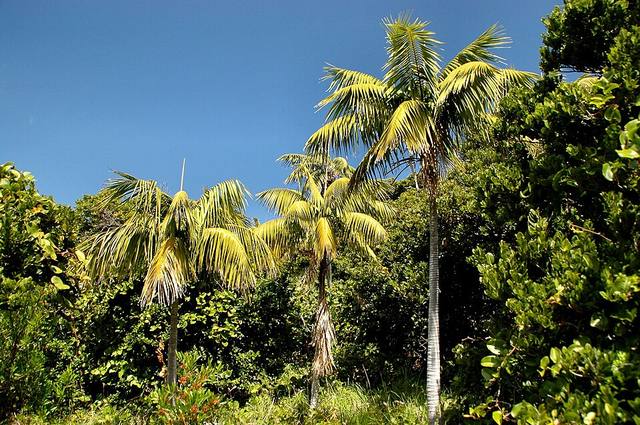
Photo: Black Diamond Images · CC BY 2.0 · Wikimedia Commons

Kentia palm
Howea forsteriana
Also called Forster sentry palm, Paradise palm, Thatch palm
Houseplant · Family Arecaceae · Native to Lord Howe Island, Australia
A graceful, arching palm with long, dark green fronds, known for its Victorian-parlour looks. It is slow, tolerates low light and is one of the toughest indoor palms.
The ASPCA lists this plant as non-toxic to cats and dogs
Care
Light
Medium light
Bright shade to medium indirect light. It copes with low light better than most palms. Direct sun scorches and bleaches the fronds.
Water
About every 9 days in the growing season, every 16 in the cool season
Water well, then let the top dry out. It dislikes sitting in water and also long dry spells. In winter it needs less. Overwatering is the main cause of death.
Water when the top 3 to 5 cm (1 to 2 in) of soil is dry
Humidity
Medium humidity
Ordinary home air is fine. Dry air can brown the tips.
Temperature
15 to 28 °C (59 to 82 °F)
Grows at 15 to 28 °C (59 to 82 °F). It tolerates cooler rooms, but is damaged below about 5 °C (41 °F).
Soil
A deep, rich, free-draining potting mix with perlite or sand. Use a tall pot with drainage holes, as it has deep roots.
Feeding
Every 6 weeks in the growing season
Feed every 6 weeks in spring and summer with a palm or houseplant feed. Skip it in winter.
Repotting
Every 3 years
Repot every 3 to 4 years in spring, into a pot just one size up. It likes being snug and resents root disturbance.
Pruning
Cut off fully brown fronds at the base and trim brown tips following the leaf shape. Never cut the top growth bud.
Propagation
Seed only, and it is very slow and best left to growers. Plants are not divided or cut. Buy a plant instead.
Size
100 to 250 cm (39 to 98 in)
Slow growing
Outdoors
USDA zones 9 to 11
Grows outdoors in frost-free climates in part shade or sun near the coast. Elsewhere, keep it indoors.
Common problems
Brown leaf tips
Dry air, tap-water salts or irregular watering
Water evenly, use rainwater or filtered water, and trim the tips.
Yellowing fronds
Overwatering or old age
Let the top dry between waterings. Cut off old lower fronds.
Brown, crisp patches
Direct sun
Move it out of direct sun.
Fine webbing, speckled fronds
Spider mites
Wipe fronds with a damp cloth and repeat weekly.
White cotton fluff on fronds
Mealybugs
Dab with a cotton bud dipped in rubbing alcohol, and repeat.
Did you know?
The kentia palm comes from Lord Howe Island, and exporting its seed to the world became a major island industry. It was a favourite palm of Victorian parlours.
General care information for a typical plant. Conditions in your home or garden may need a different rhythm.
Not sure what your plant is?
Identify a plant from a photoSee this guide in the appKagn Plants also keeps your own plants with watering reminders, and its plant doctor reads what is wrong with one.
Updated 22 November 2026.