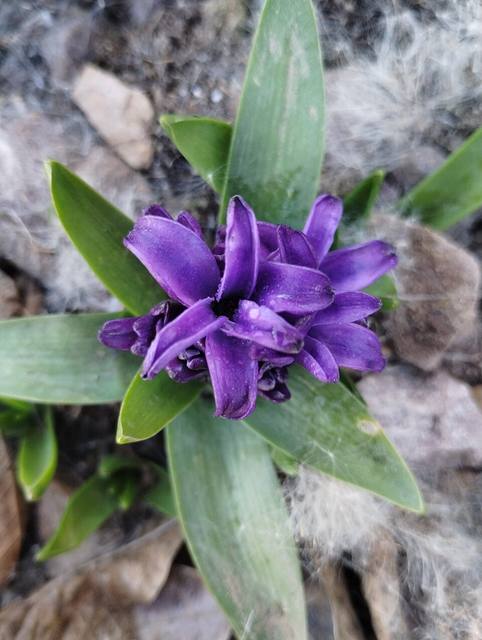
Photo: Plantman · CC BY-SA 4.0 · Wikimedia Commons

Hyacinth
Hyacinthus orientalis
Also called Garden hyacinth, Dutch hyacinth, Common hyacinth
Garden flower · Family Asparagaceae · Native to Southern Turkey, Syria and Lebanon
A spring bulb with a thick spike of strongly scented bell-shaped flowers. Grown in beds and pots, and forced indoors in glasses of water or in bowls for winter flowers.
Toxic to cats and dogs
Toxic principle: Possibly narcissus-like alkaloids
Signs: Intense vomiting, diarrhea, occasionally with blood, depression and tremors.
Care
Light
Full sun
Full sun or part shade outdoors. Forced bulbs indoors need bright light after sprouting. Too little light makes them floppy.
Water
About every 30 days
Water forced bulbs indoors when the top is dry, but never let the base sit in water. Outdoors it needs rain only. After leaves die back, stop watering. Summer is dormancy, so both numbers are 30.
Water when the top 2 cm (1 in) of mix is dry, while in growth
Humidity
Medium humidity
Normal air is fine. Cool rooms prolong flowers.
Temperature
5 to 18 °C (41 to 64 °F)
Hardy to about -29 °C (-20 °F). Forced bulbs flower best in a cool room at 10 to 18 °C (50 to 64 °F); warmth shortens bloom.
Soil
Well-drained, gritty soil. Neutral to slightly alkaline. Wet soil rots the bulb.
Feeding
Feed lightly with a high-potash feed after flowering until leaves die back, if you plant out.
Repotting
Do not repot. Forced bulbs can be planted out after flowering and flower smaller. Do not force twice.
Pruning
Remove the flower stalk after flowering and let leaves die back naturally, then cut them off.
Propagation
Offsets form around the bulb. Remove and plant them in autumn, though they take 3 years to flower.
Size
20 to 30 cm (8 to 12 in)
Medium growth
Outdoors
USDA zones 4 to 8
Hardy in zones 4 to 8. Plant bulbs 10 to 15 cm (4 to 6 in) deep in autumn in groups. Gloves protect hands from irritation.
Common problems
Flower spike is floppy
Too warm or too little light indoors
Move to a cool, bright place and turn the pot.
Bulb rots
Standing in water or wet soil
Keep the base of a water-forced bulb just above the water. Plant outdoors in a drained spot.
Flowers smaller each year
Bulb is spent
Plant new bulbs each year or feed after flowering.
Skin itches after handling bulbs
Calcium oxalate crystals in the bulb
Wear gloves when handling and planting bulbs.
Bulbs dug up
Squirrels or mice
Plant deeper or cover with netting.
Did you know?
Dutch growers made the hyacinth famous in the 1700s, and over 2,000 types were once listed.
General care information for a typical plant. Conditions in your home or garden may need a different rhythm.
Not sure what your plant is?
Identify a plant from a photoSee this guide in the appKagn Plants also keeps your own plants with watering reminders, and its plant doctor reads what is wrong with one.
Updated 22 November 2026.