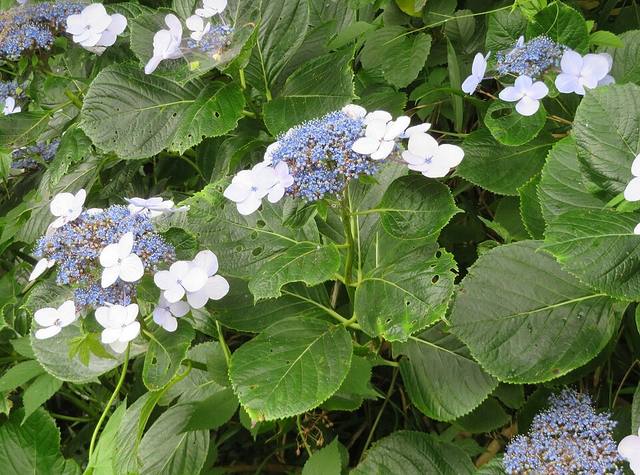
Photo: belvedere04 · CC BY 4.0 · Wikimedia Commons

Bigleaf hydrangea
Hydrangea macrophylla
Also called Hortensia, Mophead hydrangea, Lacecap hydrangea, French hydrangea
Shrub · Family Hydrangeaceae · Native to Japan
A rounded shrub with large heads of pink, blue or white flowers from summer into autumn. Flower colour in many types depends on soil acidity.
The ASPCA lists a close relative, hills of Snow (Hydrangea arborescens), as toxic to cats and dogs: treat this plant the same.
Care
Light
Part sun
Morning sun and afternoon shade. Leaves wilt and scorch in hot afternoon sun; deep shade gives few flowers.
Water
About every 4 days in the growing season, every 21 in the cool season
Water deeply and often in summer: the name hydrangea means water vessel. Mulch to hold moisture. Wilting in hot afternoons often recovers by evening.
Water when the top 2.5 cm (1 in) of soil is dry
Humidity
Medium humidity
Average humidity is fine. It likes air flow but shelter from hot, drying wind.
Temperature
10 to 27 °C (50 to 81 °F)
Best at 10 to 27 °C (50 to 81 °F). Hardy to about -20 °C (-4 °F) but late frosts can kill flower buds.
Soil
Rich, moist, well-drained soil with compost. Acidic soil, pH below 5.5, gives blue flowers; pH above 6.5 gives pink ones in most types.
Feeding
Feed once in spring with a slow-release shrub fertiliser. Too much nitrogen gives leaves, not flowers.
Repotting
Shrub planted in the ground. Potted plants are repotted every 2 to 3 years in spring.
Pruning
Do not prune hard. Remove dead stems in spring and deadhead after flowering, on old-wood types cutting to the first strong pair of buds.
Propagation
Take softwood cuttings in early summer and root them in moist compost; success is high, but flowers take 2 to 3 years.
Size
90 to 180 cm (35 to 71 in)
Medium growth
Outdoors
USDA zones 6 to 9
Plant in sheltered, part-shade spots, 90 to 150 cm (3 to 5 ft) apart. In zones 5-6 protect from winter cold.
Common problems
Wilting leaves
Heat or dry soil
Water deeply and mulch; shade the plant in the afternoon.
No flowers
Frost-killed buds or wrong pruning
Protect buds in winter and prune only dead wood and spent flowers.
Brown spots on leaves
Fungal leaf spot
Remove affected leaves and water at the base.
Pink flowers instead of blue
Soil pH too high
Acidify the soil for blue flowers, or accept pink.
Brown flower heads
Sun scorch or frost
Give afternoon shade and winter shelter.
Did you know?
In soil with a pH below about 5.5 and available aluminium, the flowers turn blue; it is a rare case of one plant changing colour with the soil.
General care information for a typical plant. Conditions in your home or garden may need a different rhythm.
Not sure what your plant is?
Identify a plant from a photoSee this guide in the appKagn Plants also keeps your own plants with watering reminders, and its plant doctor reads what is wrong with one.
Updated 22 November 2026.