Photo: Gmihail at Serbian Wikipedia · CC BY-SA 3.0 rs · Wikimedia Commons

Mother of thousands
Kalanchoe daigremontiana
Also called Devil's backbone, Mexican hat plant, Alligator plant
Succulent or cactus · Family Crassulaceae · Native to Madagascar
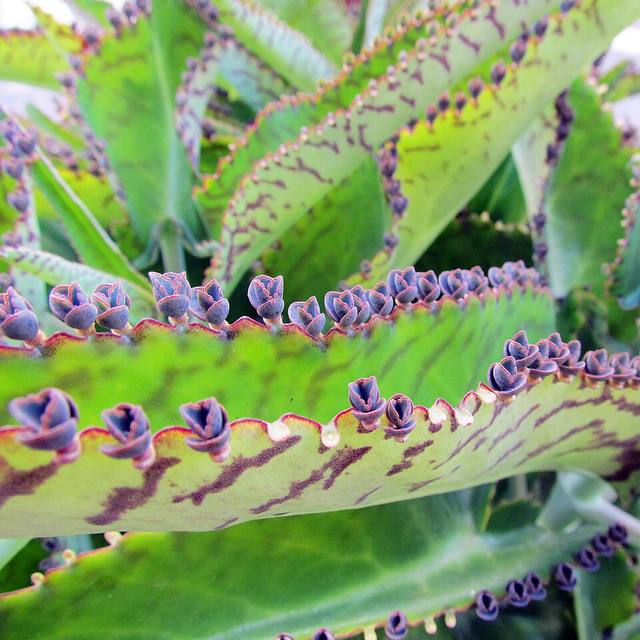
An upright succulent with grey-green, toothed leaves that grow tiny baby plants along their edges. It is easy, but it spreads fast and is invasive in warm places.
Toxic to cats and dogs
Toxic principle: Bufodienolides
Signs: Vomiting, diarrhea, abnormal heart rhythm (rare)
Care
Light
Bright, indirect light
Bright light with some direct sun. In low light it stretches and the leaves turn thin and pale. Sun in hot summer weather can burn the leaves.
Water
About every 14 days in the growing season, every 28 in the cool season
Water deeply, then let the soil dry. It stores water in the thick leaves, so dry spells do no harm. Wet soil rots the stem.
Water when the soil is dry all the way down
Humidity
Low humidity
Dry home air is fine.
Temperature
15 to 30 °C (59 to 86 °F)
Keep it at 15 to 30 °C (59 to 86 °F). It is damaged below about 5 °C (41 °F), so keep it indoors in cold weather.
Soil
A fast-draining cactus mix with extra grit or perlite. Use a pot with drainage holes. Plantlets will root in any gritty soil.
Feeding
Every 8 weeks in the growing season
Feed every 8 weeks in spring and summer with a half-strength cactus fertiliser. Do not feed in winter.
Repotting
Every 2 years
Repot every 2 years in spring. It tolerates a snug pot, and fallen plantlets will fill the pot on their own.
Pruning
Cut off leggy stems and old leaves. Pick off plantlets before they drop if you do not want them to spread.
Propagation
Pluck the baby plantlets from the leaf edges and press them on gritty mix: they root within days. Adult stem cuttings also root easily.
Size
40 to 100 cm (16 to 39 in)
Medium growth
Outdoors
USDA zones 9 to 11
Grows outdoors in frost-free, dry gardens in sun or part shade. It spreads aggressively by plantlets and is invasive in some warm regions, so keep it in pots.
Common problems
Seedlings everywhere
Plantlets drop off the leaves
Pick them off before they fall, or keep them in a tray and give them away.
Stretched, pale stem
Too little light
Move to a brighter spot.
Soft, brown stem base
Overwatering
Let it dry fully and take a cutting from a healthy top.
Leaves drop
Cold or dry roots
Keep it warm and water when dry.
White powdery coating
Powdery mildew in humid air
Improve air movement and avoid wetting leaves.
Did you know?
Each leaf edge grows dozens of tiny plantlets complete with roots. A single plant can fill a bed with its young, which is why it is a weed in many warm countries.
General care information for a typical plant. Conditions in your home or garden may need a different rhythm.
Not sure what your plant is?
Identify a plant from a photoSee this guide in the appKagn Plants also keeps your own plants with watering reminders, and its plant doctor reads what is wrong with one.
Updated 22 November 2026.