Photo: Agnieszka Kwiecień, Nova · CC BY-SA 4.0 · Wikimedia Commons

Panda plant
Kalanchoe tomentosa
Also called Pussy ears, Chocolate soldier, Plush plant
Succulent or cactus · Family Crassulaceae · Native to Madagascar
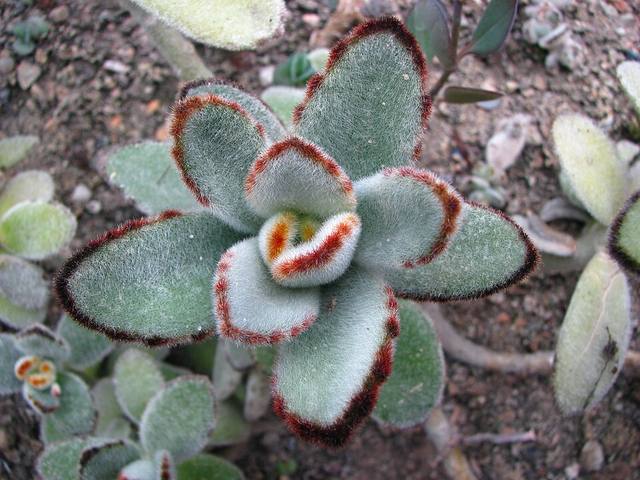
A succulent with thick, soft, fuzzy grey-green leaves with chocolate-brown spots along the tips. It grows slowly into a small bush and is easy to keep.
Toxic to cats and dogs
Toxic principle: Bufodienolides
Signs: Vomiting, diarrhea, abnormal heart rhythm (rare)
Care
Light
Bright, indirect light
Bright light with several hours of direct sun. Too little light makes it stretch and loses the brown tips. Fuzzy leaves can burn in sudden hot sun.
Water
About every 14 days in the growing season, every 28 in the cool season
Water the soil, not the fuzzy leaves, and let it dry fully. Wet fuzz and wet soil lead to rot. It stores water, so a missed week is fine.
Water when the soil is dry all the way down
Humidity
Low humidity
Dry home air is fine. Avoid wetting the leaves.
Temperature
15 to 30 °C (59 to 86 °F)
Keep it at 15 to 30 °C (59 to 86 °F). It is damaged below about 5 °C (41 °F), so keep it indoors in winter.
Soil
A fast-draining cactus mix with extra grit or perlite. Use a pot with drainage holes, ideally clay.
Feeding
Every 8 weeks in the growing season
Feed every 8 weeks in spring and summer with a half-strength cactus fertiliser. Do not feed in winter.
Repotting
Every 2 years
Repot every 2 years in spring, into a pot one size up. It is happy to stay snug.
Pruning
Pinch off tips or cut leggy stems in spring to make it bushy. Remove dead leaves from the base.
Propagation
Twist off a leaf, or cut a stem tip, let the cut dry for a day, then lay it on gritty mix. Roots and a new plantlet form in several weeks.
Size
30 to 60 cm (12 to 24 in)
Slow growing
Outdoors
USDA zones 9 to 11
Grows outdoors in full sun to part shade in frost-free, dry gardens, and does well in rock gardens. Elsewhere it is a pot plant.
Common problems
Soft, mushy leaves
Overwatering
Let it dry fully, water only the soil and check drainage.
Leggy stems, small pale leaves
Too little light
Move to a brighter window and pinch the tips.
Brown fuzz loss on leaves
Handling or water on leaves
Avoid touching the leaves and water at the base.
Black spots on leaves
Rot or cold
Remove affected leaves and keep it drier and warmer.
White cottony fluff
Mealybugs
Dab with a cotton bud dipped in rubbing alcohol.
Did you know?
The brown marks along the leaf tips look like a panda's paws, and the soft, hairy coating is made of tiny hairs that reduce water loss in the sun.
General care information for a typical plant. Conditions in your home or garden may need a different rhythm.
Not sure what your plant is?
Identify a plant from a photoSee this guide in the appKagn Plants also keeps your own plants with watering reminders, and its plant doctor reads what is wrong with one.
Updated 22 November 2026.