Photo: Gabriel Collares · CC BY 4.0 · Wikimedia Commons

Crape myrtle
Lagerstroemia indica
Also called Crepe myrtle, Lilac of the South
Tree · Family Lythraceae · Native to China and Korea
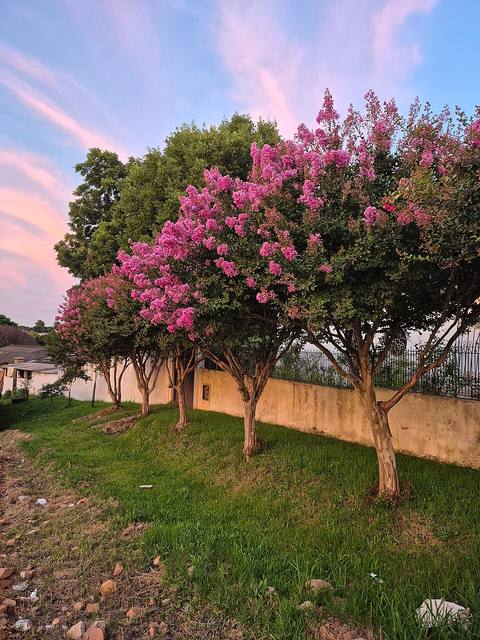
A small, multi-stemmed tree with crinkled pink, white or red flowers through late summer and peeling, mottled bark. It colours in autumn and is a popular tree in warm regions.
The ASPCA lists this plant as non-toxic to cats and dogs
Care
Light
Full sun
Needs full sun, at least 6 hours. In shade it flowers little and gets mildew.
Water
About every 10 days in the growing season, every 30 in the cool season
Water new trees deeply once a week for the first 2 years. Established trees tolerate drought, but watering in summer drought improves flowering. Deciduous: dormant in winter.
Water young trees every 7 to 10 days in dry weather
Humidity
Medium humidity
Humid air promotes powdery mildew. Good air flow helps.
Temperature
15 to 35 °C (59 to 95 °F)
Hardy to about -17 °C (1 °F). Grows best at 15 to 35 °C (59 to 95 °F). It loves summer heat, and the stems die back in hard frost.
Soil
Well-drained, fertile soil, acid to neutral. It tolerates clay if it does not stay wet. Heavy, wet clay causes root rot.
Feeding
Feed lightly in spring with a balanced feed. Too much nitrogen gives leaves and no flowers.
Repotting
Grows in a large container for some years. Otherwise plant in the ground in spring.
Pruning
Prune lightly in late winter, thinning crossing branches and cutting spent flower heads. Hard topping ('crape murder') ruins the shape and makes weak shoots.
Propagation
Softwood cuttings in summer root in warm, moist compost. Most people buy named cultivars, which resist mildew.
Size
300 to 800 cm (118 to 315 in)
Medium growth
Outdoors
USDA zones 7 to 10
Plant in full sun and warmth. Dwarf forms grow 1 to 2 m (3 to 6 ft). Space large trees 4 to 5 m (13 to 16 ft) apart. Needs hot summers to flower well.
Common problems
White powder on leaves
Powdery mildew
Plant in full sun with air flow and choose a mildew-resistant cultivar. Avoid overhead watering.
Black sooty film on leaves
Crape myrtle aphid honeydew
Spray aphids off with water or use soapy water.
Few flowers
Shade, too much nitrogen or hard topping
Give full sun, stop feeding and stop topping.
Stems die in winter
Frost in colder zones
Cut dead wood to the base in spring. It often regrows from the roots.
White waxy scale on bark
Crape myrtle bark scale
Scrape off small areas and spray with horticultural oil in winter.
Did you know?
Its common name 'crepe' comes from the crinkled petals, which look like crepe paper. Some trees in Asia and the southern United States are over 100 years old.
General care information for a typical plant. Conditions in your home or garden may need a different rhythm.
Not sure what your plant is?
Identify a plant from a photoSee this guide in the appKagn Plants also keeps your own plants with watering reminders, and its plant doctor reads what is wrong with one.
Updated 22 November 2026.