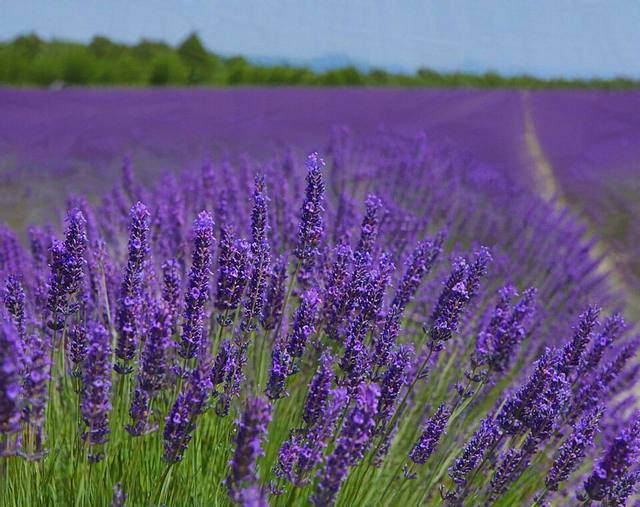
Photo: Steffen Bauer (www.saatpilot.de) · CC BY 4.0 · Wikimedia Commons

English lavender
Lavandula angustifolia
Also called Common lavender, True lavender
Garden flower · Family Lamiaceae · Native to Western Mediterranean
A compact, silvery shrub with spikes of fragrant purple flowers. Bees love it and the flowers are used dried in sachets.
Toxic to cats and dogs
Toxic principle: Linalool, linalyl acetate
Signs: Nausea, vomiting, inappetence
Care
Light
Full sun
Full sun, at least 6 hours a day. In shade it grows leggy and flowers poorly.
Water
About every 10 days in the growing season, every 30 in the cool season
Water new plants weekly for the first summer; once established it needs little. Wet feet and winter rain are what kill it, not drought.
Water when the top 5 cm (2 in) of soil is dry
Humidity
Low humidity
Prefers dry air and good air flow. Humid, still places invite fungus.
Temperature
10 to 30 °C (50 to 86 °F)
Best at 10 to 30 °C (50 to 86 °F). Hardy to about -20 °C (-4 °F) when the soil is well drained.
Soil
Poor to average, sharply drained soil, pH 6.5 to 8. Add grit to heavy clay or plant on a mound. Avoid rich soil.
Feeding
No feeding needed. Rich soil or fertiliser makes soft, short-lived growth.
Repotting
Every 3 years
In pots, repot every 2 to 3 years into gritty mix. In beds divide rarely; replace old plants every 5 to 8 years.
Pruning
Cut back by one third just after flowering, into green stems. Never cut into old bare wood: it will not regrow.
Propagation
Take 8 cm (3 in) softwood cuttings in early summer or semi-ripe cuttings in late summer and root them in gritty compost.
Size
30 to 90 cm (12 to 35 in)
Medium growth
Outdoors
USDA zones 5 to 9
Plant in full sun in sharp drainage, 30 to 60 cm (1 to 2 ft) apart. Good in beds, edges and containers.
Eating
Flower buds (culinary lavender)
Use only unsprayed flowers; the essential oil is not for eating.
Common problems
Woody, bare centre
Not pruned yearly
Trim after flowering each year; replace very old plants.
Grey or brown dying shoots
Wet soil or root rot
Improve drainage, plant on a mound and water less.
Few flowers
Too much shade or rich soil
Move to sun and skip fertiliser.
Spittle on stems
Froghopper nymphs
Wash off with water; harmless.
Dead patches after winter
Cold wet soil
Plant in sharply drained soil and prune only in green growth.
Did you know?
Lavender flowers last a long time dried, and the plant's name comes from the Latin lavare, to wash, because the Romans scented their baths with it.
General care information for a typical plant. Conditions in your home or garden may need a different rhythm.
Not sure what your plant is?
Identify a plant from a photoSee this guide in the appKagn Plants also keeps your own plants with watering reminders, and its plant doctor reads what is wrong with one.
Updated 22 November 2026.