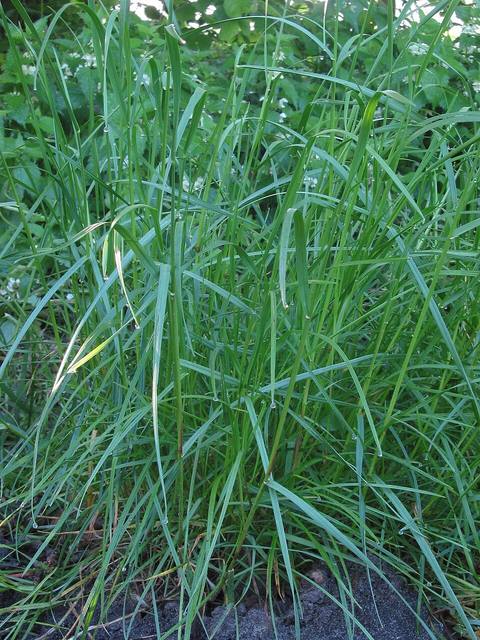
Photo: Rasbak · CC BY-SA 3.0 · Wikimedia Commons

Perennial ryegrass
Lolium perenne
Also called English ryegrass, Ryegrass
Lawn weed · Family Poaceae · Native to Europe, western Asia and North Africa
A glossy, dark green grass that grows quickly and wears well. It is the main grass in sports pitches and many lawn seed mixes, and a weed only where it is not wanted.
Not on the ASPCA's list: keep it out of reach of pets.
Care
Light
Full sun
Thrives in full sun and tolerates light shade. It thins out in dense shade.
Water
About every 7 days in the growing season, every 21 in the cool season
A shallow-rooted grass that browns fast in dry spells. Soak once a week in a drought, not a little each day. It is dormant or slow in winter, so water only when dry.
Water deeply when the grass turns grey-green and footprints stay
Humidity
Medium humidity
Ordinary air is fine. Mild damp winters suit it better than hard continental ones.
Temperature
10 to 25 °C (50 to 77 °F)
Hardy to about -23 °C (-9 °F), less hardy than bluegrass. It grows best at 10 to 25 °C (50 to 77 °F) and suffers in heat and hard frost.
Soil
Fertile, well-drained, neutral loam. Does not like very dry sand or waterlogged, compacted ground.
Feeding
Every 8 weeks in the growing season
Lawn feed every 8 weeks in spring and autumn. Thin growth lets moss and weeds in.
Repotting
Nothing to repot. Overseed bare patches each autumn and rake out thatch.
Pruning
Mow regularly at 4 to 6 cm (1.5 to 2.5 in). To remove it from a bed or a different lawn, dig out the clumps with their roots. It does not spread by underground stems.
Propagation
Sow seed in spring or early autumn. It germinates fast, in 5 to 10 days, so it is used to patch lawns and repair bare ground.
Size
10 to 80 cm (4 to 31 in)
Fast growing
Outdoors
USDA zones 3 to 8
Lawns, sports fields, verges and pastures with mild, damp weather. It grows in sun and light shade.
Common problems
Dead patches in a hard winter or dry summer
Poor cold and drought tolerance
Overseed in autumn and water deeply in drought.
Tufts that stand out from the lawn
It grows in clumps and does not knit
Overseed with bluegrass or fescue to thicken the sward.
Brown tips after mowing
Blunt mower blades
Sharpen blades and cut no more than a third at once.
Moss or bare areas
Shade, thatch or compaction
Rake out thatch, aerate and overseed.
Red or pink threads in the grass
Red thread fungus in low-nitrogen lawns
Feed the lawn and rake out affected leaves.
Did you know?
It is one of the fastest lawn grasses to start from seed, sprouting in about a week, which is why it is used for quick repairs and as a nurse grass in seed mixes.
General care information for a typical plant. Conditions in your home or garden may need a different rhythm.
Not sure what your plant is?
Identify a plant from a photoSee this guide in the appKagn Plants also keeps your own plants with watering reminders, and its plant doctor reads what is wrong with one.
Updated 22 November 2026.