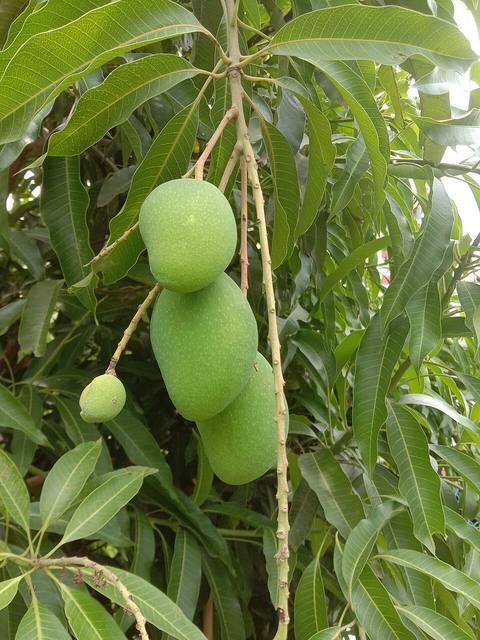
Photo: Billjones94 · CC BY-SA 4.0 · Wikimedia Commons

Mango
Mangifera indica
Also called Mango tree
Tree · Family Anacardiaceae · Native to South Asia (India and Myanmar)
A large, evergreen tropical tree with glossy leaves and sweet, juicy fruit. It is a major fruit crop, and it can be grown in a big pot in cooler climates.
Not on the ASPCA's list: keep it out of reach of pets.
Care
Light
Full sun
Needs full sun, at least 6 to 8 hours. In shade it will not flower or fruit. Young trees are sheltered from the hottest afternoon sun.
Water
About every 7 days in the growing season, every 14 in the cool season
Water young trees deeply once a week in dry weather. An established tree needs far less. A short dry spell helps it flower. In winter water less, and keep it from standing in wet ground.
Water when the top 5 cm (2 in) of soil is dry
Humidity
Medium humidity
Humid weather at flowering brings fungal problems. Dry weather during flowering helps fruit set.
Temperature
21 to 35 °C (70 to 95 °F)
Grows best at 21 to 35 °C (70 to 95 °F). Young trees are damaged by temperatures near 4 °C (39 °F), and frost kills them.
Soil
Deep, well-drained soil with plenty of compost. Slightly acid, about pH 5.5 to 7.5. It dislikes wet ground.
Feeding
Every 6 weeks in the growing season
Feed young trees every 6 weeks in the growing season with a balanced feed. Use a feed lower in nitrogen on trees that flower.
Repotting
Do not repot a tree in the ground. A potted tree moves to a larger pot every 2 to 3 years in spring.
Pruning
Prune after harvest. Remove dead wood and crossing branches, and cut back vertical growth to keep the tree a manageable size.
Propagation
Most mango trees are grafted. Seed from a fresh stone grows a tree in a few weeks, but it can take 5 to 8 years to fruit and the fruit varies.
Size
400 to 1500 cm (157 to 591 in)
Fast growing
Outdoors
USDA zones 10 to 12
Grows outdoors in frost-free climates in full sun. A mature tree is large, so space it 8 to 12 m (26 to 40 ft) from buildings.
Eating
Ripe fruit flesh
The sap and skin can irritate sensitive skin, as mango is related to poison ivy. Wash hands after handling.
Common problems
Flowers but no fruit
Rain or cold at flowering
Nothing to fix. A warm, dry flowering period is best.
Black spots on leaves and fruit
Anthracnose fungus
Remove infected leaves and fruit and give the tree more air.
White powder on flowers
Powdery mildew
Prune for airflow and remove affected flower clusters.
Leaves yellow
Wet roots or hunger
Check the drainage and feed in the growing season.
Young tree dies back in cold
Frost damage
Protect young trees from frost and wait for regrowth.
Did you know?
Mango trees can live and bear fruit for well over 100 years. It is the national fruit of India.
General care information for a typical plant. Conditions in your home or garden may need a different rhythm.
Not sure what your plant is?
Identify a plant from a photoSee this guide in the appKagn Plants also keeps your own plants with watering reminders, and its plant doctor reads what is wrong with one.
Updated 22 November 2026.