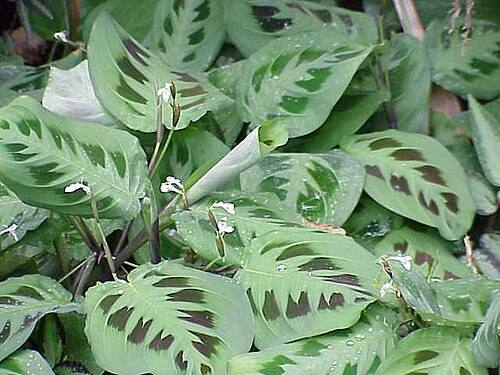
Photo: Kurt Stüber [1] · CC BY-SA 3.0 · Wikimedia Commons

Prayer plant
Maranta leuconeura
Also called Maranta, Rabbit tracks, Ten commandments plant
Houseplant · Family Marantaceae · Native to Brazil (tropical rainforest floor)
A low plant with painted leaves that fold upright at night like praying hands. The patterned leaves, red veins or dark blotches, are the reason to grow it.
The ASPCA lists this plant as non-toxic to cats and dogs
Care
Light
Medium light
Bright shade or filtered light, away from direct sun. Leaves fade and curl in strong sun. In deep shade the colours dull and it stops folding at night.
Water
About every 7 days in the growing season, every 12 in the cool season
Keep the soil lightly moist, never soggy and never bone dry. It is sensitive to tap-water salts, so leave water out overnight or use rainwater. Curling leaves mean thirst.
Water when the top 2 cm (1 in) of soil is dry
Humidity
High humidity
Likes humid air. Brown, crispy edges usually mean dry air. Use a pebble tray, a humidifier or group it with other plants.
Temperature
18 to 27 °C (64 to 81 °F)
Keep it at 18 to 27 °C (64 to 81 °F). It dislikes cold draughts and is damaged below about 10 °C (50 °F).
Soil
Peaty, well-draining mix, such as houseplant compost with perlite and a little bark. Slightly acidic is ideal. Use a shallow pot with drainage holes.
Feeding
Every 4 weeks in the growing season
Feed every 4 weeks in spring and summer with a half-strength houseplant fertiliser. Pause in winter.
Repotting
Every 2 years
Repot every 2 years in spring into a slightly wider, shallow pot. It spreads sideways, so wide pots suit it better than deep ones.
Pruning
Cut off tired or brown leaves at the base. Trim leggy stems just above a leaf node in spring to keep it bushy.
Propagation
Divide the clump in spring, making sure each piece has roots and leaves. Or take stem cuttings with a node and root them in water or damp mix in a warm place.
Size
15 to 30 cm (6 to 12 in)
Medium growth
Outdoors
USDA zones 11 to 12
Only outdoors in frost-free, humid, shaded gardens. Elsewhere it lives indoors all year.
Common problems
Brown, crispy leaf edges
Dry air or tap-water salts
Raise humidity and use filtered or rainwater.
Leaves curl inward
Thirst or dry air
Water thoroughly and check the pot is not drying out between waterings.
Faded, pale leaves
Too much sun
Move to bright shade, away from direct sun.
Yellow leaves
Overwatering or cold
Let the top dry a little, and keep it away from cold windows.
Fine webbing under leaves
Spider mites
Rinse the leaves, raise humidity and wipe the undersides weekly.
Did you know?
The leaves move daily: they lie flat in daylight and fold upward at night, driven by water pressure in a joint at the leaf base. This is called nyctinasty.
General care information for a typical plant. Conditions in your home or garden may need a different rhythm.
Not sure what your plant is?
Identify a plant from a photoSee this guide in the appKagn Plants also keeps your own plants with watering reminders, and its plant doctor reads what is wrong with one.
Updated 22 November 2026.