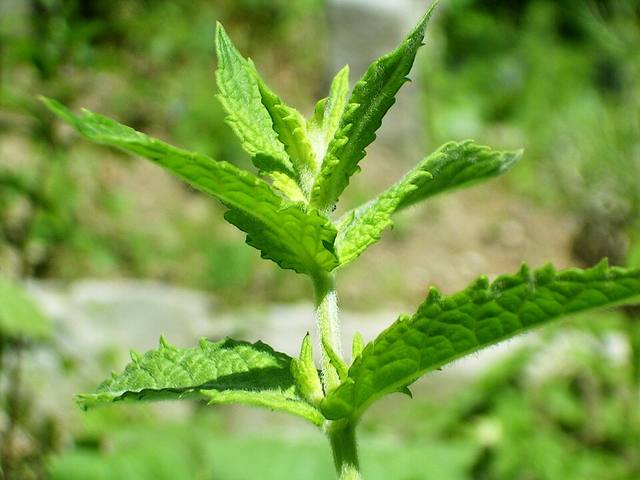
Photo: Simon Eugster --Simon 13:07, 2 July 2006 (UTC) · CC BY-SA 3.0 · Wikimedia Commons

Spearmint
Mentha spicata
Also called Garden mint, Mint, Common mint
Herb · Family Lamiaceae · Native to Europe and Western Asia
A fast-spreading herb with bright green, crinkled, pointed leaves and a sweet, mild mint flavour. It is used in tea and cooking, and spreads fast by runners.
Toxic to cats and dogs
Toxic principle: Essential oils
Signs: Vomiting and diarrhea with large ingestions
Care
Light
Part sun
Part shade to full sun. In hot places afternoon shade keeps the leaves soft and lush; in deep shade it gets leggy.
Water
About every 3 days in the growing season, every 10 in the cool season
Keep the soil evenly damp, never dry or soggy. Pots dry fast in summer. In winter it dies back, so water only enough to stop the roots drying.
Water when the top 2 cm (1 in) of soil is dry
Humidity
Medium humidity
Normal humidity. Dry, hot spells bring brown leaf edges and spider mites.
Temperature
15 to 25 °C (59 to 77 °F)
Best at 15 to 25 °C (59 to 77 °F). The roots survive to about -20 °C (-4 °F), and the leaves die back in winter.
Soil
Rich, moist, well-drained soil, pH 6 to 7. Grow it in a pot, or sink a pot in the soil, because it spreads fast by runners.
Feeding
Every 6 weeks in the growing season
Feed with a general fertiliser every 4 to 6 weeks in spring and summer. Lots of nitrogen gives leaves with less flavour.
Repotting
Every 1 year
Divide and repot every year or two in spring, as the roots fill a pot fast and the centre goes woody.
Pruning
Pinch the tips often to make it bushy. Cut it back by half in midsummer and remove flower buds to keep the leaves tasty.
Propagation
Cut a 10 cm (4 in) stem below a node and put it in water, where roots form in 1 to 2 weeks. Pieces of runner root easily.
Size
30 to 90 cm (12 to 35 in)
Fast growing
Outdoors
USDA zones 3 to 9
Hardy perennial in moist soil in part shade. Plant it in a sunken bucket, or it will take over the bed.
Eating
Leaves
Common problems
Rust-coloured spots under leaves
Mint rust
Remove and bin leaves; cut the plant to the ground, and avoid wet leaves.
Leaves yellow, plant thin
Dry soil or hunger
Water evenly and feed lightly.
Spreading everywhere
Invasive runners
Keep it in a pot or contained bed; cut runners.
Brown edges
Dry or hot
Move to part shade and water more often.
Woody centre, few leaves
Old plant
Divide in spring and replant the young outer pieces.
Did you know?
Spearmint tastes sweet and mild because its main oil is carvone, which is also in caraway. Peppermint is much stronger because it holds a lot of menthol.
General care information for a typical plant. Conditions in your home or garden may need a different rhythm.
Not sure what your plant is?
Identify a plant from a photoSee this guide in the appKagn Plants also keeps your own plants with watering reminders, and its plant doctor reads what is wrong with one.
Updated 22 November 2026.