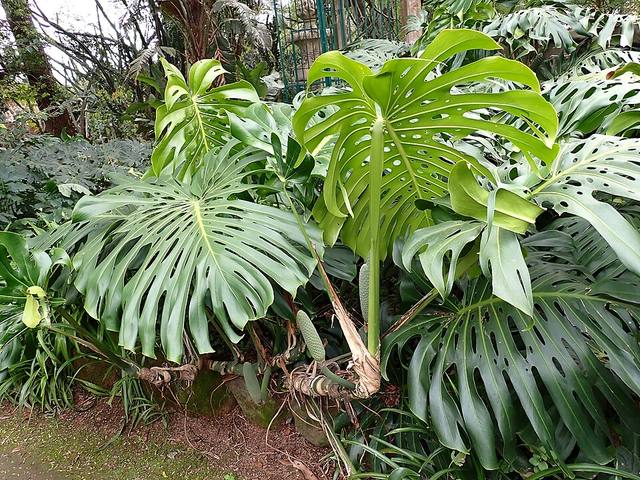
Photo: Krzysztof Ziarnek, Kenraiz · CC BY-SA 4.0 · Wikimedia Commons

Swiss cheese plant
Monstera deliciosa
Also called Monstera, Split-leaf philodendron, Hurricane plant, Ceriman
Houseplant · Family Araceae · Native to Southern Mexico to Panama
A big climbing plant whose leaves split and grow holes as they mature. It is a favourite statement plant and grows fast in good light.
Toxic to cats and dogs
Toxic principle: Insoluble calcium oxalates
Signs: Oral irritation, burning of mouth and lips, drooling, vomiting, difficulty swallowing
Care
Light
Bright, indirect light
Bright indirect light. Young plants with no splits or holes usually need more light. Direct afternoon sun burns the leaves.
Water
About every 8 days in the growing season, every 16 in the cool season
Water thoroughly and empty the saucer. Yellow leaves and a damp, sour smell mean too much water; brown crispy edges mean too dry.
Water when the top 5 cm (2 in) of soil is dry
Humidity
Medium humidity
Likes 50% humidity or more but adapts to normal homes. Aerial roots are normal.
Temperature
18 to 29 °C (64 to 84 °F)
Best at 18 to 29 °C (64 to 84 °F). Damage begins below 10 °C (50 °F); keep away from cold draughts.
Soil
Chunky, airy mix: potting soil with bark and perlite. Roots need air as well as moisture. The pot must drain.
Feeding
Every 4 weeks in the growing season
Feed every 4 weeks in spring and summer with a balanced liquid fertiliser. None in winter.
Repotting
Every 2 years
Repot every 2 years in spring into a pot 5 cm (2 in) wider. Refresh the top soil in between.
Pruning
Cut off old or damaged leaves at the stem. Prune to control size just above a node in spring.
Propagation
Cut a stem with a node and an aerial root, then root it in water or moist soil. Roots appear in 3 to 4 weeks.
Size
100 to 250 cm (39 to 98 in)
Fast growing
Outdoors
USDA zones 10 to 12
Outdoors only in frost-free climates, in shade or part shade with room to climb. It can spread in tropical regions.
Eating
Ripe fruit (outdoors, rarely indoors)
Unripe fruit and the rest of the plant irritate the mouth and throat; only fully ripe fruit is eaten.
Common problems
Yellow leaves
Overwatering or poor drainage
Let the top 5 cm (2 in) dry out before watering; check the pot drains.
Brown, crispy edges
Dry air or irregular watering
Water on a steadier routine and raise humidity a little.
No splits in new leaves
Not enough light or a young plant
Move to brighter indirect light and give a moss pole to climb.
Drooping stems
Needs support or thirst
Add a stake or pole; water if the soil is dry.
Brown spots with yellow edges
Fungal leaf spot or sunburn
Remove affected leaves, keep leaves dry and shade from hot sun.
Did you know?
The holes and splits probably let wind and heavy rain pass through the leaves in the forest. In the wild, it can bear a corn-cob-like fruit that tastes like pineapple.
General care information for a typical plant. Conditions in your home or garden may need a different rhythm.
Not sure what your plant is?
Identify a plant from a photoSee this guide in the appKagn Plants also keeps your own plants with watering reminders, and its plant doctor reads what is wrong with one.
Updated 22 November 2026.