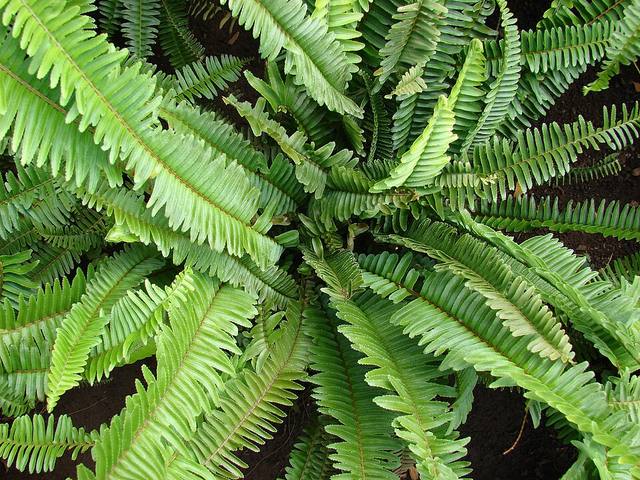
Photo: Forest & Kim Starr · CC BY 3.0 · Wikimedia Commons

Sword fern
Nephrolepis cordifolia
Also called Tuber sword fern, Erect sword fern, Lemon button fern (Duffii type)
Houseplant · Family Nephrolepidaceae · Native to Tropics and subtropics worldwide
An upright, easy fern with narrow arching fronds that grows in tufts. Compact forms such as the lemon button fern suit shelves and hanging baskets.
The ASPCA lists this plant as non-toxic to cats and dogs
Care
Light
Bright, indirect light
Bright light without direct midday sun, or a lightly shaded spot. Too little light gives thin, sparse fronds. Strong sun scorches the fronds pale and crisp.
Water
About every 5 days in the growing season, every 9 in the cool season
Keep the mix evenly damp but never soggy. Water until it drains and empty the saucer. The commonest mistake is letting it dry out, which turns fronds brown and crisp. Water less in winter.
Water when the top 2 cm (1 in) of mix feels dry
Humidity
Medium humidity
Likes moist air but copes with ordinary rooms better than most ferns. Stand it on a pebble tray, and keep it away from heaters.
Temperature
15 to 27 °C (59 to 81 °F)
Grows best at 15 to 27 °C (59 to 81 °F). Fronds suffer below 5 °C (41 °F) and in hot, dry draughts.
Soil
A light, peaty, moisture-holding mix with some perlite. Slightly acid. The pot must drain. It has small water-storing tubers on its roots.
Feeding
Every 4 weeks in the growing season
Feed every 4 weeks from spring to early autumn with a houseplant feed at half strength. Do not feed in winter.
Repotting
Every 2 years
Repot every 2 years in spring when the roots fill the pot, one size up. It is happiest slightly pot-bound.
Pruning
Cut off brown or dead fronds at the base. Do not trim live fronds.
Propagation
Divide a large clump in spring into pieces with roots and fronds. Pot them in damp mix. It also sends out runners that root.
Size
30 to 90 cm (12 to 35 in)
Medium growth
Outdoors
USDA zones 9 to 11
Grows outdoors in frost-free areas in part shade and moist soil, where it can spread. Elsewhere keep it as a houseplant.
Common problems
Brown, crisp frond tips
Dry air or dry mix
Keep the mix evenly damp and raise humidity. Trim dead fronds at the base.
Pale, yellowing fronds
Too much sun or too little feed
Move it out of direct sun. Feed at half strength in the growing season.
Fronds drop leaflets everywhere
Dry mix or a sudden draught
Water as soon as the top dries and keep it away from heaters and doors.
Fronds yellow and the mix smells
Waterlogged roots
Let the top dry a little, empty the saucer and repot in fresh mix if needed.
Sticky fronds, small brown bumps
Scale insects
Wipe off with a damp cloth and repeat weekly until clear.
Did you know?
The small tubers along its roots store water, which is why this fern copes with dry spells better than many others. The lemon button fern is a dwarf form of this species.
General care information for a typical plant. Conditions in your home or garden may need a different rhythm.
Not sure what your plant is?
Identify a plant from a photoSee this guide in the appKagn Plants also keeps your own plants with watering reminders, and its plant doctor reads what is wrong with one.
Updated 22 November 2026.