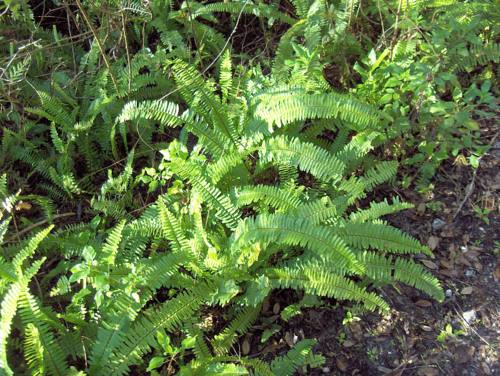
Photo: Homer Edward Price · CC BY 2.0 · Wikimedia Commons

Boston fern
Nephrolepis exaltata
Also called Sword fern, Fishbone fern, Ladder fern
Houseplant · Family Nephrolepidaceae · Native to Tropics and subtropics worldwide
A lush fern with long, arching, feathery fronds. It looks great in a hanging basket but is fussy about dry air and dry soil.
The ASPCA lists this plant as non-toxic to cats and dogs
Care
Light
Bright, indirect light
Bright indirect light or light shade. Pale, yellow fronds mean too much sun; thin, sparse growth means too little.
Water
About every 4 days in the growing season, every 8 in the cool season
Keep evenly moist and never let the root ball dry out. Drying out causes crispy brown fronds; standing water rots the roots.
Water when the top 2.5 cm (1 in) of soil is just dry
Humidity
High humidity
Needs high humidity. Keep away from heaters and vents. A bathroom helps; misting does little.
Temperature
16 to 24 °C (61 to 75 °F)
Best at 16 to 24 °C (61 to 75 °F). Below 10 °C (50 °F) the fronds are damaged.
Soil
Rich, loose, moisture-holding potting mix with peat-free compost and some perlite. The pot must drain.
Feeding
Every 4 weeks in the growing season
Feed monthly in spring and summer with a half-strength liquid fertiliser. None in winter.
Repotting
Every 2 years
Repot every 2 years in spring when roots fill the pot, or divide the clump.
Pruning
Cut off brown or yellow fronds at the base. Trim old fronds hard in spring for fresh growth.
Propagation
Divide the clump in spring. You can also pot up the runners (stolons) when they touch soil.
Size
30 to 90 cm (12 to 35 in)
Medium growth
Outdoors
USDA zones 9 to 11
Outdoors in frost-free climates in shade and moist soil. In colder zones, summer it outside in a basket.
Common problems
Brown, crispy fronds
Dry air or dry soil
Keep the soil moist and raise humidity.
Dropping tiny leaflets
Dry air, heat or draught
Move away from heaters and vents.
Yellow fronds
Too much sun or overwatering
Move to filtered light and check the soil.
Pale, washed-out growth
Too much light
Give filtered light.
Brown spots under fronds
Spores, not insects
Natural reproduction; leave them.
Did you know?
The Boston fern started from a mutation of the sword fern found in a shipment of 1894 plants to Boston, and many cultivars come from that one sport.
General care information for a typical plant. Conditions in your home or garden may need a different rhythm.
Not sure what your plant is?
Identify a plant from a photoSee this guide in the appKagn Plants also keeps your own plants with watering reminders, and its plant doctor reads what is wrong with one.
Updated 22 November 2026.