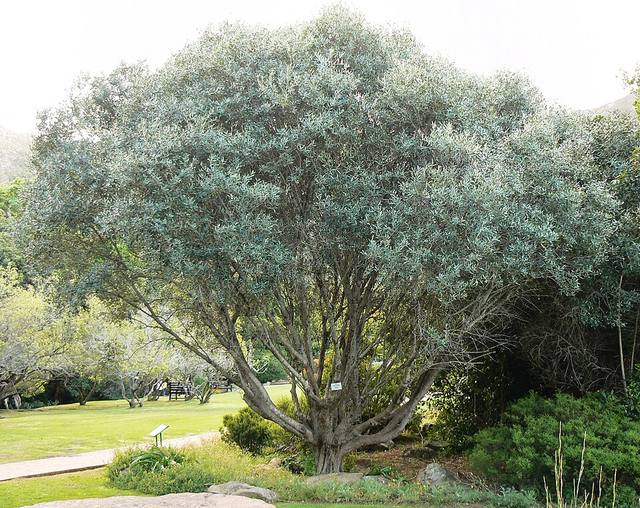
Photo: Abu Shawka · Public domain · Wikimedia Commons

Olive
Olea europaea
Also called Olive tree, European olive
Tree · Family Oleaceae · Native to Mediterranean basin and western Asia
A slow-growing evergreen tree with silvery leaves, grown for its fruit and oil and for its look. It lives for centuries and copes with drought and poor soil.
Not on the ASPCA's list: keep it out of reach of pets.
Care
Light
Full sun
Full sun, as much as possible. It will survive in light shade but will not fruit. Indoors it needs the brightest window and does best outside.
Water
About every 10 days in the growing season, every 21 in the cool season
Water deeply, then let it dry. It is drought-tolerant once established but potted trees need regular water in summer. It hates wet feet. Water little in winter.
Water when the top 5 cm (2 in) of soil is dry
Humidity
Low humidity
Dry air is fine.
Temperature
10 to 35 °C (50 to 95 °F)
Best at 10 to 35 °C (50 to 95 °F). Hardy to about -10 °C (14 °F) once established. Wet cold is more damaging than dry cold.
Soil
Free-draining, gritty soil, even poor or stony. Slightly alkaline to neutral. Avoid heavy, wet clay.
Feeding
Every 6 weeks in the growing season
Feed every 6 weeks in spring and summer with a balanced fertiliser, or a slow-release one in spring. Do not overfeed.
Repotting
Every 3 years
Repot a potted tree every 3 years in spring into a slightly larger pot, or root-prune and replace the top soil.
Pruning
Prune in spring after frost to open the centre so light reaches the branches. Remove dead wood and suckers. Do not cut very hard.
Propagation
Take semi-ripe cuttings in summer, with a rooting hormone and a warm bottom. Slow and unreliable. Most gardeners buy a young tree.
Size
150 to 600 cm (59 to 236 in)
Slow growing
Outdoors
USDA zones 8 to 11
Grows outdoors in mild, dry climates in full sun and well-drained soil. Space 4 to 6 m (13 to 20 ft). In colder areas grow in a pot.
Eating
Ripe fruit (olives)
Raw olives are very bitter and need curing before eating.
Common problems
Leaves yellow and fall
Overwatering or poor drainage
Check the pot drains; let the soil dry between waterings.
No fruit
No cold winter chill, or too young, or lack of sun
Give full sun; fruiting needs a cool winter and may take years.
Black sooty film on leaves
Scale insect honeydew
Wipe leaves and treat the scale.
Leaf spots, rings
Peacock spot fungus
Remove affected leaves and keep air flowing.
Frost-damaged shoots
Hard frost
Cut back in spring once new growth starts.
Did you know?
Some olive trees are over 1000 years old. They can regrow from the roots after they are cut down.
General care information for a typical plant. Conditions in your home or garden may need a different rhythm.
Not sure what your plant is?
Identify a plant from a photoSee this guide in the appKagn Plants also keeps your own plants with watering reminders, and its plant doctor reads what is wrong with one.
Updated 22 November 2026.