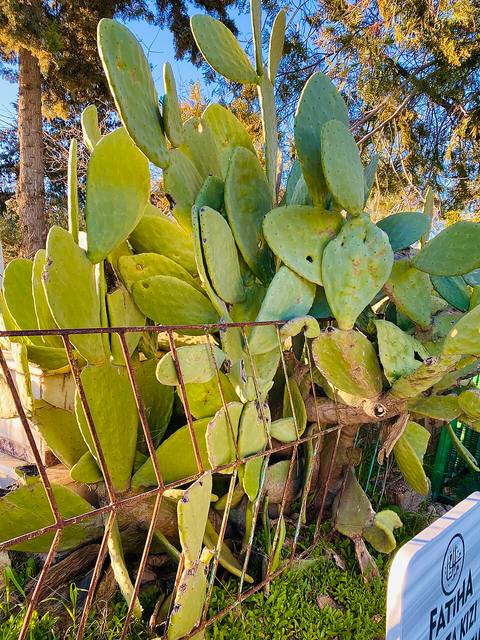
Photo: YG01 · CC BY 4.0 · Wikimedia Commons

Prickly pear
Opuntia ficus-indica
Also called Indian fig opuntia, Nopal, Barbary fig, Cactus pear
Succulent or cactus · Family Cactaceae · Native to Mexico (widely naturalised)
A large, paddle-shaped cactus that grows into a big shrub. It is grown for its edible fruit and pads and is one of the most widely planted cacti in the world.
The ASPCA lists this plant as non-toxic to cats and dogs
Care
Light
Full sun
Full sun, as much as possible. In low light the pads become thin and weak. Indoors it needs the brightest window, but suits outdoor pots best.
Water
About every 14 days in the growing season, every 45 in the cool season
Water deeply and let it dry out. It is drought-tough. Wrinkled pads mean thirst; yellow, soft ones mean too much. Water very little in winter.
Water when the soil is dry to 5 cm (2 in)
Humidity
Low humidity
Low humidity is ideal.
Temperature
10 to 35 °C (50 to 95 °F)
Best at 10 to 35 °C (50 to 95 °F). Hardy to about -10 °C (14 °F) when dry. Cold, wet soil kills it.
Soil
Gritty, sandy, very well-drained soil. Slightly acidic to alkaline is fine. Never heavy clay.
Feeding
Every 8 weeks in the growing season
Feed every 8 weeks in spring and summer with a low-nitrogen cactus fertiliser. Skip in winter.
Repotting
Grown in the ground, or a large, heavy pot. Repot only if rootbound, every few years. Use thick gloves.
Pruning
Cut off pads at the joint to shape or reduce. Wear thick gloves and tongs: the fine spines (glochids) irritate skin.
Propagation
Twist off a pad, let the cut dry 1 to 2 weeks, and stand it a third deep in dry gritty mix. Water after roots form, after 3 or 4 weeks.
Size
100 to 300 cm (39 to 118 in)
Medium growth
Outdoors
USDA zones 8 to 11
Grows outdoors in full sun on dry, well-drained soil. Space 1.5 m (5 ft) apart. It can spread aggressively in warm regions.
Eating
Ripe fruit (tunas) and young pads (nopales)
Remove spines and glochids from the fruit and pads before eating.
Common problems
Pads shrivel and wrinkle
Thirst
Water deeply.
Pads soft and dark
Overwatering or cold wet
Cut off affected pads. Water less and improve drainage.
Pale, thin new pads
Low light
Move into full sun.
White cottony patches
Cochineal scale
Spray with a strong jet of water or scrub off.
Skin irritation from handling
Glochids (tiny hair-like spines)
Use thick gloves and tongs; remove glochids with tape.
Did you know?
Cochineal insects live on its pads; crushed, they make a red dye that coloured clothes and food for centuries.
General care information for a typical plant. Conditions in your home or garden may need a different rhythm.
Not sure what your plant is?
Identify a plant from a photoSee this guide in the appKagn Plants also keeps your own plants with watering reminders, and its plant doctor reads what is wrong with one.
Updated 22 November 2026.