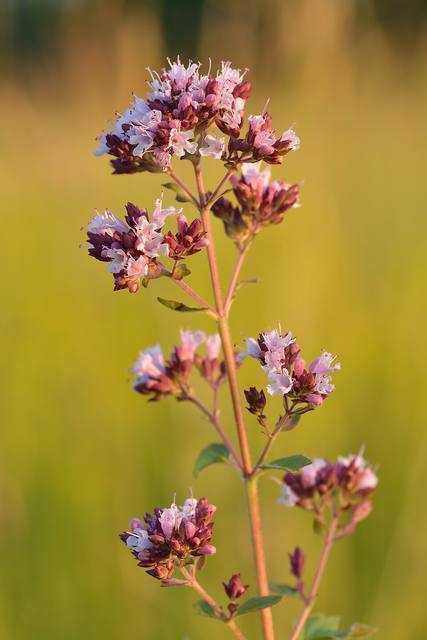
Photo: Ivar Leidus · CC BY-SA 3.0 · Wikimedia Commons

Oregano
Origanum vulgare
Also called Wild marjoram, Common oregano
Herb · Family Lamiaceae · Native to Europe and western Asia
A hardy, spreading herb with small, strongly scented leaves used in pizza, pasta and Greek and Mediterranean cooking. It is easy outdoors and does well in a pot.
Toxic to cats and dogs
Toxic principle: Gastrointestinal irritants
Signs: Mild vomiting and diarrhea
Care
Light
Full sun
Needs 6 or more hours of sun for the strongest flavour. Leggy, pale, weak-flavoured growth means too little light.
Water
About every 7 days in the growing season, every 14 in the cool season
Water deeply, then let the top dry. It copes with drought better than with wet feet. Soggy soil in winter is the commonest cause of death.
Water when the top 3 cm (1 in) of soil is dry
Humidity
Low humidity
Dry air is fine. Good air flow around the leaves stops mould.
Temperature
15 to 30 °C (59 to 86 °F)
Hardy to about -20 °C (-4 °F) outdoors. Grows best at 15 to 30 °C (59 to 86 °F). Indoors it likes a cool, bright windowsill.
Soil
Poor to average, very well-drained soil, pH 6 to 8. A gritty mix gives stronger flavour than rich soil.
Feeding
Do not feed. Rich soil makes soft growth with less flavour. Top-dress with a thin layer of gravel or sand if you wish.
Repotting
Every 3 years
Divide or repot every 3 years in spring into a slightly larger pot. Old woody clumps do better when divided.
Pruning
Cut back by half after flowering and trim in spring to keep it bushy. Pinch the tips when harvesting.
Propagation
Divide a clump in spring, or take 8 cm (3 in) cuttings in early summer and root them in gritty compost. Seed is slow and variable.
Size
30 to 60 cm (12 to 24 in)
Medium growth
Outdoors
USDA zones 4 to 9
Perennial for a sunny bed or pot, 30 cm (12 in) apart. Mulch with grit to keep the crown dry in winter. It spreads.
Eating
Leaves, fresh or dried
ASPCA lists oregano as a mild stomach irritant for cats and dogs.
Common problems
Yellow leaves, damp soil
Overwatering
Let it dry between waterings and check drainage.
Pale, leggy growth with little scent
Too little sun or too rich soil
Move to full sun, stop feeding and cut back.
Grey or white dusty film on leaves
Powdery mildew
Improve air flow, water at the base and cut back affected stems.
Woody, bare centre
Old plant
Divide and replant, or take cuttings to renew it.
Dying over winter
Wet cold soil
Plant in gritty soil or raised bed and keep pots from sitting in water.
Did you know?
The name comes from the Greek for 'joy of the mountain'. Greek oregano, a subspecies, is far stronger than the wild form.
General care information for a typical plant. Conditions in your home or garden may need a different rhythm.
Not sure what your plant is?
Identify a plant from a photoSee this guide in the appKagn Plants also keeps your own plants with watering reminders, and its plant doctor reads what is wrong with one.
Updated 22 November 2026.