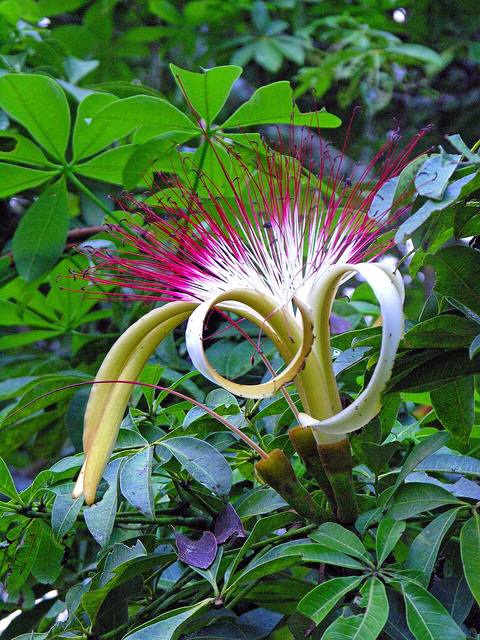
Photo: Dennis G. Jarvis · CC BY-SA 2.0 · Wikimedia Commons

Money tree
Pachira aquatica
Also called Guiana chestnut, Malabar chestnut, Braided money tree
Houseplant · Family Malvaceae · Native to Central and northern South America (wetlands)
A tree sold with a braided trunk and glossy, hand-shaped leaves, often as a gift for luck. In its native swamps it grows to a large tree.
The ASPCA lists this plant as non-toxic to cats and dogs
Care
Light
Bright, indirect light
Bright indirect light, with some morning sun. In low light it drops leaves and grows leggy; direct afternoon sun can scorch them.
Water
About every 10 days in the growing season, every 18 in the cool season
Water deeply, then let it dry out. The thick trunk stores water, so it handles missed waterings but not soggy soil, which rots the roots. Empty the saucer.
Water when the top 5 to 7 cm (2 to 3 in) of soil is dry
Humidity
Medium humidity
Normal home humidity is fine. Brown leaf tips mean very dry air or uneven watering.
Temperature
18 to 30 °C (64 to 86 °F)
Best at 18 to 30 °C (64 to 86 °F). It is damaged below about 10 °C (50 °F) and drops leaves in cold draughts.
Soil
A well-draining mix: potting compost with perlite or sand. The pot must drain.
Feeding
Every 6 weeks in the growing season
Feed with a balanced houseplant fertiliser every 4 to 6 weeks in spring and summer. None in winter.
Repotting
Every 2 years
Repot every 2 to 3 years in spring. Go up one pot size; a top-heavy tree may need a heavier pot.
Pruning
Prune in spring to shape. Remove leggy stems back to a leaf. The braided trunk cannot be re-braided, so do not remove it.
Propagation
Take a 15 cm (6 in) stem cutting with 2 or 3 leaves in spring, dip in rooting powder if you have it, and root in damp mix. Seeds also grow easily.
Size
60 to 200 cm (24 to 79 in)
Medium growth
Outdoors
USDA zones 10 to 12
Frost-free climates in full sun to part shade, including wet ground. Elsewhere keep it in a pot indoors and put it out in warm weather.
Common problems
Yellow leaves dropping
Overwatering
Let the top 5 cm (2 in) dry and check the pot drains.
Soft, rotting trunk base
Root rot
Remove it from the pot, cut off rotten roots and repot into dry mix, if the trunk is still firm.
Brown leaf tips
Dry air or salt build-up
Flush the pot with water, and raise humidity.
Leaves drooping and dropping
Cold draught or moved
Keep it warm and steady; a sulky tree usually recovers.
Long, leggy stems
Not enough light
Move to brighter light and prune back in spring.
Did you know?
The braided trunk is made by plaiting several young seedlings while they are still soft. They fuse together as they thicken, so the braid is permanent.
General care information for a typical plant. Conditions in your home or garden may need a different rhythm.
Not sure what your plant is?
Identify a plant from a photoSee this guide in the appKagn Plants also keeps your own plants with watering reminders, and its plant doctor reads what is wrong with one.
Updated 22 November 2026.