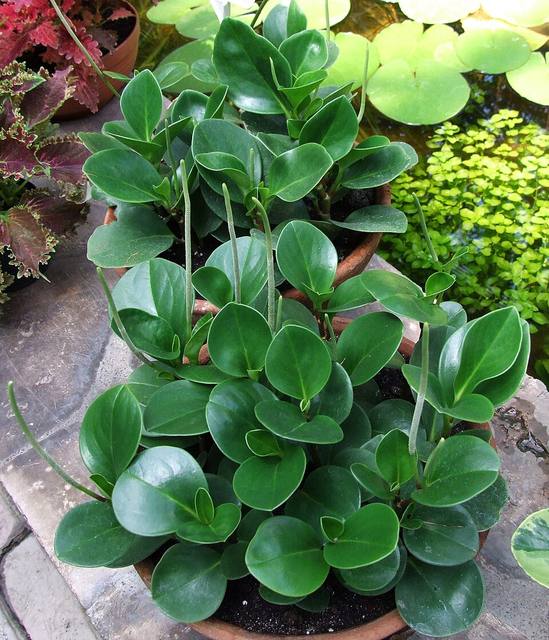
Photo: Jerzy Opioła · CC BY-SA 4.0 · Wikimedia Commons

Baby rubber plant
Peperomia obtusifolia
Also called American rubber plant, Pepper face, Blunt-leaf peperomia
Houseplant · Family Piperaceae · Native to Florida, the Caribbean and tropical America
A small, upright plant with thick, glossy, oval leaves on fleshy stems. It is compact, tidy and hard to kill, so it suits shelves and desks.
The ASPCA lists this plant as non-toxic to cats and dogs
Care
Light
Medium light
Bright indirect light to medium light. Direct sun scorches the leaves. In low light it grows slowly and gets leggy. Variegated types need brighter light.
Water
About every 12 days in the growing season, every 21 in the cool season
Water thoroughly, then let most of the soil dry. The thick leaves store water, so it prefers to be a bit dry. Overwatering is the way it usually dies.
Water when the top half of the soil is dry
Humidity
Medium humidity
Normal home humidity is fine. It does not need misting. Damp leaves in a stuffy room invite rot.
Temperature
18 to 27 °C (64 to 81 °F)
Keep at 18 to 27 °C (64 to 81 °F). Leaves drop below about 10 °C (50 °F).
Soil
A light, airy mix such as houseplant compost with extra perlite or bark. Use a small pot with drainage holes, because it has a shallow root system.
Feeding
Every 8 weeks in the growing season
Feed every 8 weeks in spring and summer with a half-strength fertiliser. It needs little.
Repotting
Every 3 years
Repot every 2 to 3 years in spring, into a pot just one size up. It likes small pots.
Pruning
Pinch the tips of long stems in spring to make it bushy. Cut off dead or damaged leaves at the stem.
Propagation
Take a leaf with a short piece of stem or a stem cutting with 2 to 3 leaves, and push it into damp, gritty mix. It roots in about 4 to 6 weeks.
Size
20 to 35 cm (8 to 14 in)
Slow growing
Outdoors
USDA zones 10 to 12
Grows outdoors only in frost-free, shaded and humid spots. Elsewhere it stays indoors.
Common problems
Leaves wrinkle and drop
Overwatering and rotting roots
Let the soil dry well, check the roots, and repot in fresh, dry mix if they are brown.
Soft, brown stem base
Stem rot
Cut healthy tips as cuttings and root them again. Throw away the rotten parts.
Curling, dull leaves
Underwatering
Water well and then keep a steadier schedule.
Leggy, stretched stems
Low light
Pinch the tips and move to brighter light.
Pale patches on leaves
Sun scorch
Move out of direct sun.
Did you know?
Peperomia flowers are odd: tiny pale spikes like mouse tails, which is why some owners call the plant a 'rat tail' relative.
General care information for a typical plant. Conditions in your home or garden may need a different rhythm.
Not sure what your plant is?
Identify a plant from a photoSee this guide in the appKagn Plants also keeps your own plants with watering reminders, and its plant doctor reads what is wrong with one.
Updated 22 November 2026.