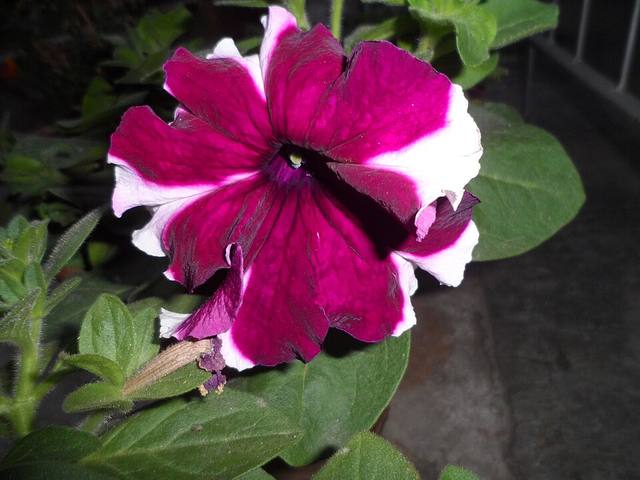
Photo: Rocksmoker 007 · CC BY-SA 3.0 · Wikimedia Commons

Garden petunia
Petunia atkinsiana
Also called Petunia, Trailing petunia, Wave petunia
Garden flower · Family Solanaceae · Native to Garden hybrid of South American species
A free-flowering summer plant with trumpet blooms in nearly every colour. It fills baskets, pots and beds from late spring until frost.
The ASPCA lists this plant as non-toxic to cats and dogs
Care
Light
Full sun
Needs 6 or more hours of sun. In shade it grows leggy with few flowers. Sticky, hairy leaves are normal.
Water
About every 3 days
Annual in most climates, so the winter figure matches summer. Baskets can need water daily in heat. Water at the base and keep leaves dry. Wet, cold soil rots roots.
Water when the top 2 cm (1 in) of soil is dry
Humidity
Medium humidity
Dislikes long wet spells. Good air flow helps prevent grey mould on flowers.
Temperature
13 to 27 °C (55 to 81 °F)
Grows best at 13 to 27 °C (55 to 81 °F). Frost kills it, and it sulks below about 2 °C (36 °F).
Soil
Light, rich, well-draining potting mix or garden soil with plenty of compost. Slightly acid to neutral. Pots need drainage holes.
Feeding
Every 2 weeks in the growing season
Feed every 1 to 2 weeks with a diluted flower fertiliser, because it flowers heavily and uses up nutrients quickly in baskets and pots.
Repotting
Not repotted. Plant new ones each spring, in pots or beds, once the frost has passed.
Pruning
Cut back leggy stems by half in midsummer to get a fresh flush. Pinch off spent flowers, except on self-cleaning wave types.
Propagation
Buy plants or start tiny seed in late winter on the soil surface with light and warmth. Cuttings of named types root in a few weeks.
Size
15 to 40 cm (6 to 16 in)
Fast growing
Outdoors
USDA zones 9 to 11
Grown as an annual in most climates. Plant out after the last frost, 20 to 30 cm (8 to 12 in) apart, in full sun.
Common problems
Stems long and bare, few flowers
Not enough sun or no cutting back
Move to full sun and cut stems back by half. Feed afterwards.
Yellow leaves
Overwatering or hunger
Let the top dry between waterings. Feed with a diluted fertiliser.
Grey fuzzy mould on flowers
Botrytis in damp weather
Remove affected flowers and water at the base. Give more space.
Wilting in the heat
Dry pot or root rot
Check the soil. Water if dry. If it is wet, stop and let it drain.
Sticky leaves with green insects
Aphids
Rinse them off with water or wipe with soapy water.
Did you know?
Modern garden petunias come from crosses between two South American species, one white and one purple, made in Europe in the 1830s.
General care information for a typical plant. Conditions in your home or garden may need a different rhythm.
Not sure what your plant is?
Identify a plant from a photoSee this guide in the appKagn Plants also keeps your own plants with watering reminders, and its plant doctor reads what is wrong with one.
Updated 22 November 2026.