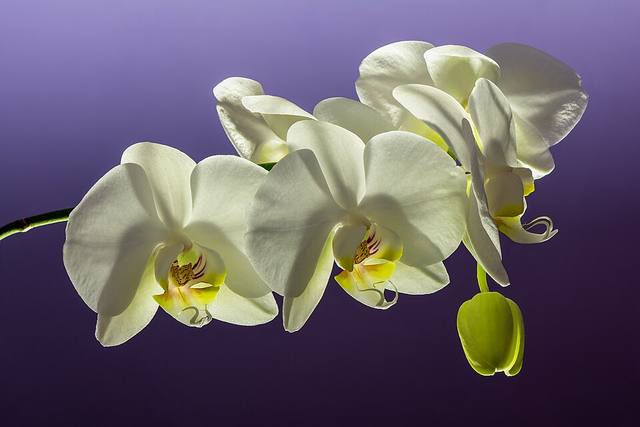
Photo: Uoaei1 · CC BY-SA 4.0 · Wikimedia Commons

Moth orchid
Phalaenopsis
Also called Phalaenopsis orchid, Phal
Houseplant · Family Orchidaceae · Native to Tropical Asia and northern Australia
The easiest orchid for homes, with arching stems of flat, long-lasting flowers. Blooms can last for months, and it can flower again with the right care.
Not on the ASPCA's list: keep it out of reach of pets.
Care
Light
Bright, indirect light
Bright indirect light, like an east window. Leaves that are dark green mean too little light for flowering. Yellow or scorched leaves mean too much direct sun.
Water
About every 7 days in the growing season, every 12 in the cool season
Soak the pot in water for 10 minutes, then drain well. Never leave water in the crown or the saucer. Green roots mean it has enough; wrinkled leaves mean thirst.
Water when the bark is dry and roots look silver-grey
Humidity
Medium humidity
Prefers 50 to 70% humidity but copes with normal homes. A tray of pebbles with water helps.
Temperature
18 to 29 °C (64 to 84 °F)
Best at 18 to 29 °C (64 to 84 °F). A drop of 5 °C (9 °F) at night in autumn helps trigger flower spikes. Below 13 °C (55 °F) it suffers.
Soil
Chunky orchid bark mix, not normal potting soil. A clear pot with drainage holes lets you see the roots.
Feeding
Every 2 weeks in the growing season
Feed at quarter strength every 2 weeks while growing, with an orchid fertiliser. Flush with plain water monthly.
Repotting
Every 2 years
Repot every 2 years after flowering, when the bark breaks down. Do not trim healthy green roots.
Pruning
After flowering cut the spike above a node if it is still green to get another bloom, or at the base if it is brown. Remove dead leaves.
Propagation
Beginners can grow the small plantlets (keikis) that sometimes form on the flower spike, once they have roots 5 cm (2 in) long.
Size
30 to 60 cm (12 to 24 in)
Slow growing
Outdoors
USDA zones 11 to 12
Outdoors only in frost-free climates, in shade on a tree or in a hanging basket.
Common problems
Wrinkled, limp leaves
Roots rotted or too dry
Check the roots: cut brown mushy ones and repot in fresh bark.
Flower buds dropping
Draught, dry air or a move
Keep in a stable spot away from heaters and fruit.
No flowers again
Too little light or no cool night
Give brighter light and cooler nights in autumn.
Yellow lower leaves
Natural ageing or overwatering
If only the oldest leaf, ignore; otherwise water less.
Silver roots growing out of the pot
Normal aerial roots
Leave them; do not bury them.
Did you know?
Its flowers are shaped like a flying moth, hence the name. Orchid seeds are so small that growers in the lab germinate them on jelly.
General care information for a typical plant. Conditions in your home or garden may need a different rhythm.
Not sure what your plant is?
Identify a plant from a photoSee this guide in the appKagn Plants also keeps your own plants with watering reminders, and its plant doctor reads what is wrong with one.
Updated 22 November 2026.