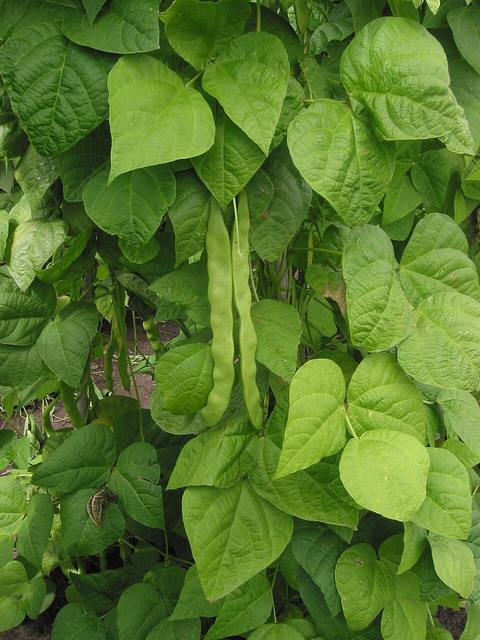
Photo: Rasbak · CC BY-SA 3.0 · Wikimedia Commons

Common bean
Phaseolus vulgaris
Also called French bean, Green bean, Kidney bean, Snap bean, Haricot bean
Vegetable · Family Fabaceae · Native to Central and South America
A frost-tender annual grown for its green pods or dried beans, as a bush or a climber. It is quick and easy from seed in warm weather.
Not on the ASPCA's list: keep it out of reach of pets.
Care
Light
Full sun
Needs full sun and shelter. Shade gives few pods and leaves that stay pale. Pods drop if plants get too hot or too dry while flowering.
Water
About every 4 days
Water regularly, and most when flowers and pods form. Water the soil, not the leaves. It is an annual, so winter_days equals summer_days; it is not alive in winter.
Water when the top 3 cm (1 in) of soil is dry
Humidity
Medium humidity
Outdoor air is fine. Wet leaves in humid weather bring rust and blight.
Temperature
18 to 30 °C (64 to 86 °F)
Killed by frost; harmed below about 2 °C (36 °F). Sow when soil is above 12 °C (54 °F). Best at 18 to 30 °C (64 to 86 °F).
Soil
Fertile, well-drained soil with compost, pH 6 to 7. Do not add much nitrogen, because beans make their own.
Feeding
Feed little: beans fix their own nitrogen. A potash feed once flowers show can help pods in a pot.
Repotting
Not repotted: sow where it will grow, 5 cm (2 in) deep. Sow again every 3 weeks for a steady crop.
Pruning
No pruning. Pick pods young and often to keep plants cropping. Pinch the tip of climbers once they reach the top of their support.
Propagation
Sow seed 4 to 5 cm (1.5 to 2 in) deep, 8 to 10 cm (3 to 4 in) apart, after frost. It germinates in 7 to 10 days in warm soil.
Size
30 to 200 cm (12 to 79 in)
Fast growing
Outdoors
USDA zones 2 to 11
Annual for a sunny, sheltered bed. Bush types need no support; climbers need a 2 m (6 ft) frame. Rotate beds each year.
Eating
Young pods, or ripe beans once cooked
Raw or undercooked dried beans, especially kidney beans, contain a toxin and make people sick. Boil dried beans hard for at least 10 minutes first.
Common problems
Seeds rot or do not appear
Cold, wet soil
Wait until soil is above 12 °C (54 °F) before sowing; sow again if needed.
Flowers fall without pods
Heat, drought or cold nights
Water steadily and mulch; sow so flowering misses very hot weather.
Rust-orange spots on leaves
Bean rust
Remove affected leaves, space plants and water at the base.
Black aphids on tips
Aphids
Pinch off tips or wash off with water.
Stringy, tough pods
Picked late
Pick pods while young and the seeds inside are small.
Did you know?
The common bean was first farmed in the Americas about 7,000 years ago, often grown beside maize and squash.
General care information for a typical plant. Conditions in your home or garden may need a different rhythm.
Not sure what your plant is?
Identify a plant from a photoSee this guide in the appKagn Plants also keeps your own plants with watering reminders, and its plant doctor reads what is wrong with one.
Updated 22 November 2026.