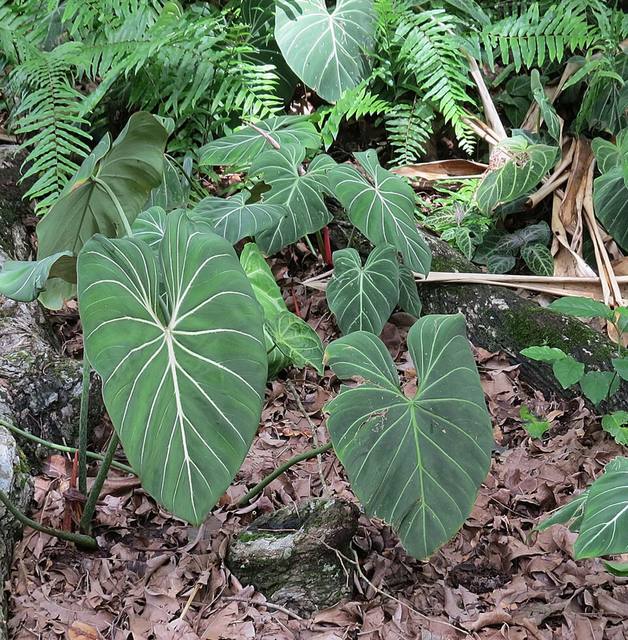
Photo: Dick Culbert from Gibsons, B.C., Canada · CC BY 2.0 · Wikimedia Commons

Gloriosum
Philodendron gloriosum
Also called Velvet-leaf philodendron, Creeping philodendron
Houseplant · Family Araceae · Native to Colombia
A creeping philodendron with huge, heart-shaped, velvety leaves marked with white veins. It grows along the soil rather than climbing, so it suits a wide pot.
Toxic to cats and dogs
Toxic principle: Insoluble calcium oxalates
Signs: Oral irritation, pain and swelling of mouth, tongue and lips, excessive drooling, vomiting, difficulty swallowing
Care
Light
Bright, indirect light
Bright, indirect light keeps the leaves large and the veins crisp. Direct sun bleaches and scorches the velvet. Too little light gives smaller, darker leaves on long stalks.
Water
About every 8 days in the growing season, every 14 in the cool season
Water thoroughly and let the top layer dry. The thick creeping stem rots if it sits wet, so keep it just at soil level, not buried. Use room-temperature water.
Water when the top 3 cm (1 in) of soil is dry
Humidity
Medium humidity
Average home humidity is fine, but it does better at 50 percent or more. Brown leaf edges suggest dry air.
Temperature
18 to 28 °C (64 to 82 °F)
Keep it at 18 to 28 °C (64 to 82 °F). Damage begins below about 13 °C (55 °F), so keep it away from cold drafts.
Soil
A chunky, airy mix of potting soil, bark and perlite. Use a wide, shallow pot with drainage holes, because the stem creeps along the surface.
Feeding
Every 4 weeks in the growing season
Feed every 4 weeks in spring and summer with a half-strength houseplant fertiliser. Stop in winter.
Repotting
Every 2 years
Repot every 2 years into a wider, not deeper, pot. Leave the creeping stem resting on the soil surface.
Pruning
Remove yellow or damaged leaves at the base. It needs no shaping.
Propagation
Cut a section of creeping stem with at least one node and a leaf, and lay it on moist mix or place it in water. Roots form in a few weeks.
Size
40 to 100 cm (16 to 39 in)
Medium growth
Outdoors
Not grown outdoors in most places. It is a warm rainforest floor plant, only suited to frost-free shade in the tropics.
Common problems
Leaves yellow and mushy
Overwatering
Let the soil dry on top, check the pot drains and empty the saucer.
Brown scorched patches
Direct sun
Move it out of direct sun to bright shade or filtered light.
Small new leaves
Not enough light or food
Move to a brighter spot and feed during the growing season.
Brown leaf edges
Dry air or dry soil
Water more evenly and raise humidity with a tray of pebbles or a humidifier.
Stem lifts out of the soil
Natural creeping growth
Add a little soil on top or use a wide pot. It does not need to be pushed down.
Did you know?
Unlike climbing philodendrons, this species grows along the ground in the wild, and its leaves can reach 60 cm (2 ft) or more across on a mature plant.
General care information for a typical plant. Conditions in your home or garden may need a different rhythm.
Not sure what your plant is?
Identify a plant from a photoSee this guide in the appKagn Plants also keeps your own plants with watering reminders, and its plant doctor reads what is wrong with one.
Updated 22 November 2026.