Photo: Dario · CC0 · Wikimedia Commons

Velvet philodendron
Philodendron verrucosum
Also called Ecuador philodendron, Verrucosum
Houseplant · Family Araceae · Native to Costa Rica to Ecuador
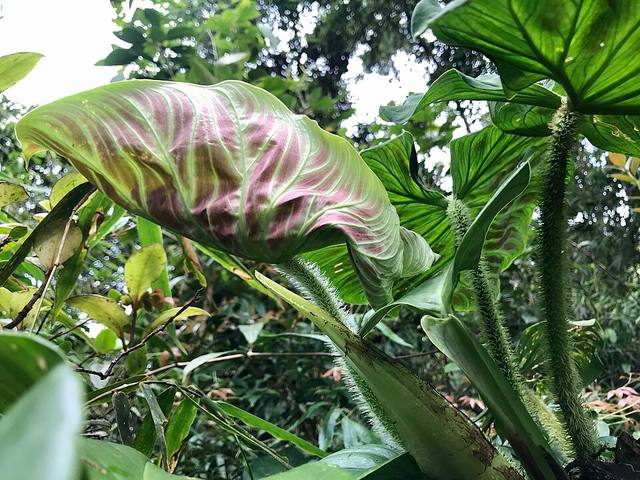
A climbing philodendron with velvety, dark green leaves veined in light green and often red underneath. It is prized for its looks but wants steady warmth and moisture.
Toxic to cats and dogs
Toxic principle: Insoluble calcium oxalates
Signs: Oral irritation, pain and swelling of mouth, tongue and lips, excessive drooling, vomiting, difficulty swallowing
Care
Light
Bright, indirect light
Bright, filtered light brings out the velvet and the pale veins. Direct sun scorches the leaves. Pale, small leaves and long gaps between leaves mean it needs more light.
Water
About every 7 days in the growing season, every 12 in the cool season
Keep it lightly moist but never soggy. It dislikes both a dried-out root ball and standing water. Water with room-temperature water and empty the saucer.
Water when the top 2 to 3 cm (1 in) of soil is dry
Humidity
High humidity
It likes 60 percent humidity or more. Leaf edges crisp and new leaves fail to unfurl in dry air. A humidifier or a glass cabinet helps.
Temperature
20 to 28 °C (68 to 82 °F)
Keep it at 20 to 28 °C (68 to 82 °F). Leaves are damaged below about 15 °C (59 °F), so it is not for a cool room.
Soil
A loose, airy, moisture-holding mix: potting soil with bark, perlite and some coco fibre. Give it a moss pole to climb.
Feeding
Every 4 weeks in the growing season
Feed every 4 weeks in the growing season with a half-strength houseplant fertiliser. Skip the winter.
Repotting
Every 2 years
Repot every 2 years in spring into a pot one size up. It likes a snug pot and a pole.
Pruning
Trim off damaged or yellow leaves. Pinch long vines if you want a bushier plant.
Propagation
Cut a stem with a node and a leaf, with an aerial root if possible, and root it in damp sphagnum moss or water in a warm, humid place.
Size
40 to 150 cm (16 to 59 in)
Medium growth
Outdoors
Grown indoors only outside the tropics. It is a warm cloud-forest climber and cannot take cold.
Common problems
Crispy, brown leaf edges
Dry air
Raise humidity to 60 percent or more and keep it away from heaters.
Yellow leaves, soft stems
Wet soil and cool roots
Let the top dry between waterings, use a pot with drainage and keep the plant warm.
New leaves stay small
Low light or no support
Move it brighter and add a moss pole so it can climb.
Brown patches on leaves
Direct sun or cold water
Keep it out of direct sun and use room-temperature water.
Fine webbing under leaves
Spider mites
Rinse the leaves, raise humidity, and wipe the undersides weekly.
Did you know?
The leaves carry tiny red hairs along the stalks, which gives the species its name: verrucosum means warty, from the small bumps on the stems.
General care information for a typical plant. Conditions in your home or garden may need a different rhythm.
Not sure what your plant is?
Identify a plant from a photoSee this guide in the appKagn Plants also keeps your own plants with watering reminders, and its plant doctor reads what is wrong with one.
Updated 22 November 2026.