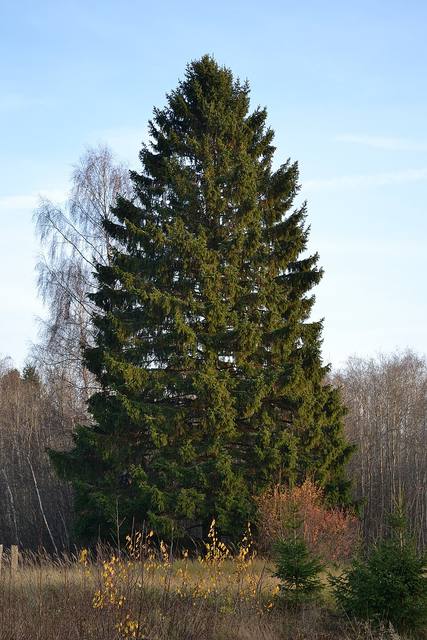
Photo: Ivar Leidus · CC BY-SA 3.0 ee · Wikimedia Commons

Norway spruce
Picea abies
Also called European spruce, Christmas tree
Tree · Family Pinaceae · Native to Northern and central Europe
A fast, conical evergreen with drooping branches and hanging cones. It is the classic Christmas tree and a major timber tree in Europe.
Not on the ASPCA's list: keep it out of reach of pets.
Care
Light
Full sun
Needs full sun to light shade. It grows best in cool, bright, open spots.
Water
About every 7 days in the growing season, every 21 in the cool season
Shallow roots dislike drought. Water new trees weekly for 2 years. Established trees need rain. It is evergreen, so water a young tree once a month in a dry winter.
Water young trees every 7 to 10 days in dry weather
Humidity
Medium humidity
It prefers cool, moist air. Hot dry cities and heat waves scorch it.
Temperature
5 to 22 °C (41 to 72 °F)
Hardy to about -40 °C (-40 °F). Grows best at 5 to 22 °C (41 to 72 °F). Hot summers stress it.
Soil
Moist, well-drained, slightly acid soil. It tolerates clay but not drought, alkaline soil or waterlogging.
Feeding
Do not feed. Mulch the roots with bark in spring.
Repotting
Plant it in the ground. A pot-grown tree for Christmas is planted out afterwards.
Pruning
Prune only while young and only the soft green tips. Do not cut into bare wood. Do not top the leader.
Propagation
Sow seed in spring. Dwarf and weeping forms are grafted.
Size
2000 to 3500 cm (787 to 1378 in)
Fast growing
Outdoors
USDA zones 2 to 7
Needs 6 to 8 m (20 to 26 ft) width. Plant in a cool, open spot. Windy sites can blow shallow roots over.
Common problems
Brown needles inside and bottom
Drought or spruce spider mite
Water deeply. Spray off mites with water in hot weather.
Dead branches at the base
Shade or normal ageing
Remove dead limbs in winter. Do not worry about the oldest.
Cone-shaped swellings on shoots
Spruce gall adelges
Cosmetic. Cut off galls before they open.
Tree blows over
Shallow roots in wet or exposed soil
Plant in sheltered, drained ground and stake while young.
Whole branch turns brown and needles drop
Spruce bark beetle or root rot
Call a tree officer. Remove badly infected trees promptly.
Did you know?
A Norway spruce clone in Sweden, 'Old Tjikko', has roots dated to about 9,500 years. The trunk is much younger, because the tree keeps regrowing from the same roots.
General care information for a typical plant. Conditions in your home or garden may need a different rhythm.
Not sure what your plant is?
Identify a plant from a photoSee this guide in the appKagn Plants also keeps your own plants with watering reminders, and its plant doctor reads what is wrong with one.
Updated 22 November 2026.