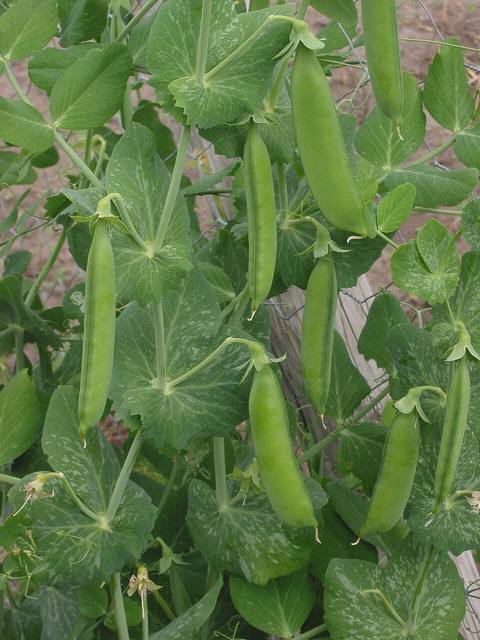
Photo: Rasbak · CC BY-SA 3.0 · Wikimedia Commons

Garden pea
Pisum sativum
Also called Pea, Green pea, Sugar snap pea, Snow pea
Vegetable · Family Fabaceae · Native to Mediterranean and Near East
A cool-season climbing or bush annual grown for sweet green peas or edible pods. It is sown early in spring and picked in early summer.
Not on the ASPCA's list: keep it out of reach of pets.
Care
Light
Full sun
Likes full sun in cool weather. It tolerates light shade. Hot, dry weather in flower stops pods setting.
Water
About every 4 days in the growing season, every 7 in the cool season
Water steadily, especially when flowers and pods form. Overwatering before flowering gives leaves and few pods. It is an annual, so winter_days is for autumn sowings in mild areas.
Water when the top 3 cm (1 in) of soil is dry
Humidity
Medium humidity
Outdoor air is fine. Cool, humid weather suits it, though damp air raises mildew.
Temperature
7 to 21 °C (45 to 70 °F)
Hardy to light frost, about -5 °C (23 °F) once established. Seed germinates above 5 °C (41 °F). Grows best at 7 to 21 °C (45 to 70 °F).
Soil
Moist, well-drained, fairly rich soil, pH 6 to 7.5. Add compost; avoid heavy waterlogged clay.
Feeding
Little feeding needed, as peas fix their own nitrogen. Dig compost in before sowing.
Repotting
Not repotted: sow where it will grow, 3 to 5 cm (1 to 2 in) deep, and sow again every 2 to 3 weeks until midsummer.
Pruning
No pruning. Pick pods every few days to keep plants cropping. Pull up plants after cropping and leave the roots in the soil.
Propagation
Sow seeds 5 cm (2 in) deep, 5 cm (2 in) apart in a trench. Support climbers with twigs or netting 1 to 2 m (3 to 6 ft) tall.
Size
40 to 180 cm (16 to 71 in)
Fast growing
Outdoors
USDA zones 2 to 11
Annual for a sunny bed, sown from late winter. Give tall types a net or twiggy support. Do not grow in the same bed two years running.
Eating
Peas and young pods
Raw garden pea pods are eaten, but sweet pea flowers (Lathyrus odoratus) are poisonous: do not confuse them.
Common problems
Seeds eaten before they sprout
Mice and birds
Cover rows with mesh or sow in pots and plant out.
White powder on leaves
Powdery mildew
Water at the base, keep the soil moist and thin crowded plants.
Maggots in pods
Pea moth
Sow early or late to avoid the flowering moth flight, or cover with fine mesh.
Few pods, flowers drop
Heat or drought
Water well during flowering and sow earlier.
Yellowing, falling plants
Root rot in cold wet soil
Sow into warmer, well-drained soil and rotate crops.
Did you know?
Gregor Mendel's work on peas in the 1860s laid the foundation for the science of genetics.
General care information for a typical plant. Conditions in your home or garden may need a different rhythm.
Not sure what your plant is?
Identify a plant from a photoSee this guide in the appKagn Plants also keeps your own plants with watering reminders, and its plant doctor reads what is wrong with one.
Updated 22 November 2026.