Photo: Rasbak · CC BY-SA 3.0 · Wikimedia Commons

Broadleaf plantain
Plantago major
Also called Common plantain, Greater plantain, Waybread
Lawn weed · Family Plantaginaceae · Native to Europe and Asia (now worldwide)
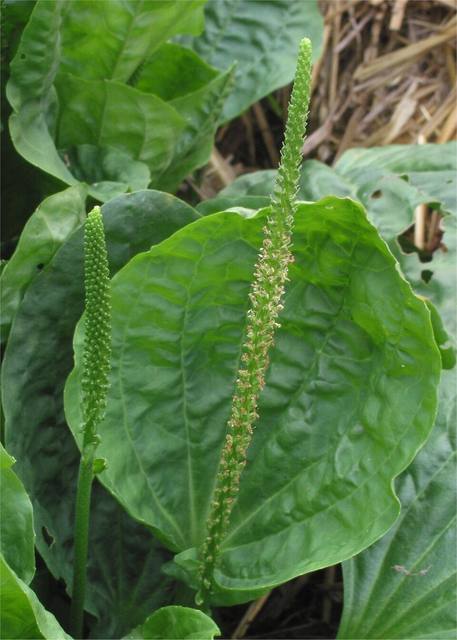
A flat rosette of broad, ribbed leaves with thin green seed spikes, common in lawns and paths. It grows where soil is hard and trodden, and its leaves are an old herbal remedy.
Not on the ASPCA's list: keep it out of reach of pets.
Care
Light
Part sun
Grows in sun or shade. It thrives in lawns, paths and compacted soil.
Water
About every 7 days in the growing season, every 14 in the cool season
It tolerates both drought and wet, but is most common on trampled, compacted soil. Improving the soil and deep watering of the lawn help turf out-compete it. It is evergreen in mild winters.
It copes with dry and wet soil, thriving in compaction
Humidity
Medium humidity
Outdoor humidity is no concern.
Temperature
10 to 28 °C (50 to 82 °F)
Hardy to about -35 °C (-31 °F). Grows best at 10 to 28 °C (50 to 82 °F). It survives trampling and frost.
Soil
Compacted, damp or poor soil, such as paths, gateways and lawns. Aerating and improving the lawn removes its advantage.
Feeding
Do not feed it. A fertile, thick lawn resists it.
Repotting
Nothing to repot. Remove it with a weeding knife.
Pruning
Dig out each plant with a long weeding tool, taking the whole taproot. Remove seed spikes before they ripen in summer. Mow high at 6 to 8 cm (2.5 to 3 in).
Propagation
Spreads by seed, thousands per plant, and the seeds stick to shoes and tyres. Remove plants before the spikes ripen.
Size
5 to 30 cm (2 to 12 in)
Medium growth
Outdoors
USDA zones 3 to 11
Found on lawns, paths and roadsides across temperate regions. It does best where soil is trodden and compacted.
Common problems
Flat rosettes smother the grass
Compacted soil and low mowing
Dig out each rosette, aerate the lawn and mow higher.
It comes back after digging
Pieces of taproot left behind
Dig 10 cm (4 in) deep and remove the whole root.
Seed spikes spread it
Seeds stick to shoes and mowers
Remove spikes before they ripen and bag clippings.
Bare patch after removal
Gaps invite new weeds
Rake and sow lawn seed straight away.
Spot-treating also hits grass
Wrong weed killer or no care
Use a selective lawn product on actively growing plants and follow the label.
Did you know?
Native North Americans called it 'white man's foot' because it appeared along the paths and settlements of European settlers. Its leaves have long been laid on stings and cuts.
General care information for a typical plant. Conditions in your home or garden may need a different rhythm.
Not sure what your plant is?
Identify a plant from a photoSee this guide in the appKagn Plants also keeps your own plants with watering reminders, and its plant doctor reads what is wrong with one.
Updated 22 November 2026.