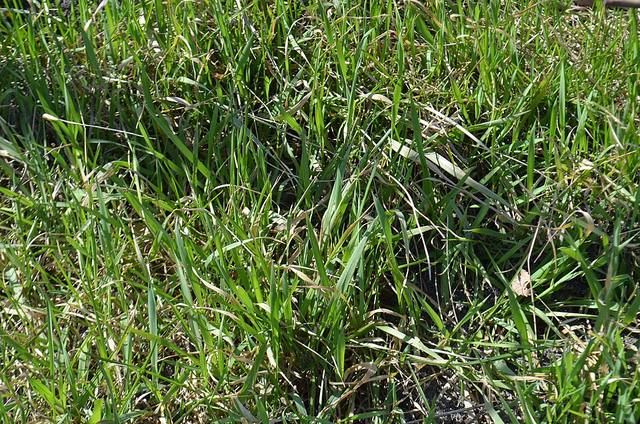
Photo: Ethan2039 · CC BY-SA 4.0 · Wikimedia Commons

Kentucky bluegrass
Poa pratensis
Also called Smooth meadow-grass, June grass, Common meadow grass
Lawn weed · Family Poaceae · Native to Europe, northern Asia and North Africa
A fine-bladed, dark green grass found in many lawns and verges. It is usually a lawn grass you want, but it spreads by underground stems and is hard to remove from beds.
Not on the ASPCA's list: keep it out of reach of pets.
Care
Light
Full sun
Thrives in full sun to light shade. It thins out in deep shade. It goes straw-coloured in summer heat and drought.
Water
About every 7 days in the growing season, every 21 in the cool season
Lawn care: soak it once a week in dry weather rather than a little each day. In winter it is dormant, so water only in dry spells. It goes brown in drought, then recovers with rain.
Water deeply when the grass turns grey-green and footprints stay
Humidity
Medium humidity
Ordinary air is fine. Long wet, humid spells bring leaf spot and dollar spot.
Temperature
15 to 24 °C (59 to 75 °F)
Hardy to about -34 °C (-29 °F). It grows best in cool weather at 15 to 24 °C (59 to 75 °F) and slows in heat.
Soil
Fertile, well-drained loam, neutral to slightly acid. It copes with most soils except very dry sand and waterlogged ground.
Feeding
Every 8 weeks in the growing season
Lawn feed every 8 weeks in spring and autumn. It is a hungry grass, and thin growth lets moss and weeds in.
Repotting
Nothing to repot. Keep a lawn healthy by mowing at 6 to 8 cm (2.5 to 3 in), raking out thatch and overseeding bare patches.
Pruning
Mow regularly at 6 to 8 cm (2.5 to 3 in) and do not cut more than a third at once. In beds, dig it out with all its roots and stems.
Propagation
Spreads by underground stems (rhizomes) and seed. To grow a lawn, sow seed in spring or early autumn. It is slow to germinate, 2 to 4 weeks, and then thickens by itself.
Size
8 to 70 cm (3 to 28 in)
Medium growth
Outdoors
USDA zones 3 to 7
A lawn and meadow grass, in full sun to light shade. Seed heads reach 30 to 90 cm (1 to 3 ft) if left uncut.
Common problems
It spreads into flower beds
Rhizomes under the soil
Dig it out with all the white stems, edge the bed with a deep barrier and mulch.
Straw-brown lawn in summer
Drought dormancy
Water deeply or wait for rain. It usually recovers.
Spongy lawn, thin grass
Thatch build-up
Rake or scarify in spring or early autumn and overseed.
Tan or straw circles
Dollar spot fungus or dog urine
Feed, avoid evening watering and rinse the spot with water after pets.
Patchy in shade
Not enough light
Sow a shade grass mix, or reduce shade by trimming trees.
Did you know?
Despite the name it is not native to Kentucky: it is native to Europe, Asia and North Africa and was brought to North America early in colonisation.
General care information for a typical plant. Conditions in your home or garden may need a different rhythm.
Not sure what your plant is?
Identify a plant from a photoSee this guide in the appKagn Plants also keeps your own plants with watering reminders, and its plant doctor reads what is wrong with one.
Updated 22 November 2026.