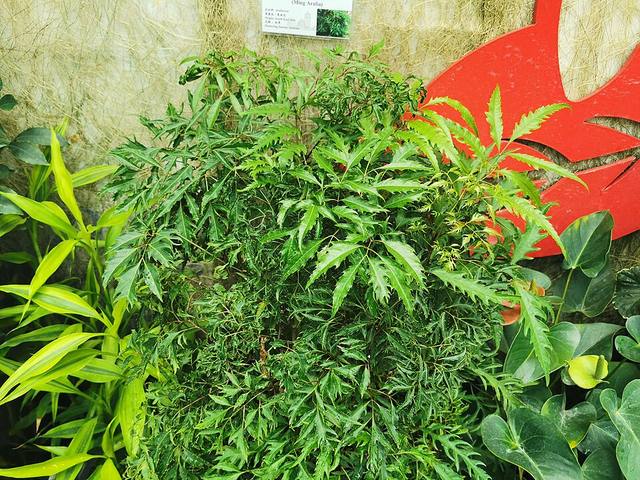
Photo: Ahmed · CC BY-SA 4.0 · Wikimedia Commons

Ming aralia
Polyscias fruticosa
Also called Ming tree, Parsley aralia, Chinese aralia
Houseplant · Family Araliaceae · Native to Tropical Asia and Pacific islands
A small, upright tree with finely cut, feathery leaves on woody stems, often grown as a bonsai or in a pot. It looks delicate and is fussy about dry air and moving.
The ASPCA lists a close relative, coffee Tree (Polyscias guilfoylei), as toxic to cats and dogs: treat this plant the same.
Care
Light
Bright, indirect light
Bright indirect light with some gentle sun. Too little light means leggy growth. A move to a new spot often makes it shed leaves.
Water
About every 7 days in the growing season, every 12 in the cool season
Keep the soil evenly moist but not soggy. It drops leaves if left dry or kept wet. Use room-temperature water.
Water when the top 2 to 3 cm (1 in) of soil is dry
Humidity
High humidity
It needs humid air. Dry heated air brings leaf drop and spider mites. Use a humidifier or group plants.
Temperature
18 to 28 °C (64 to 82 °F)
Grows at 18 to 28 °C (64 to 82 °F). Damaged below about 12 °C (54 °F). It drops leaves in cold draughts.
Soil
A rich, well-draining potting mix with some perlite. The pot needs drainage holes.
Feeding
Every 4 weeks in the growing season
Feed every 4 weeks in spring and summer with a half-strength houseplant feed. Skip it in winter.
Repotting
Every 2 years
Repot every 2 years in spring, one size up. It copes with a snug pot.
Pruning
Prune in spring to shape it and keep it compact, cutting just above a leaf. It tolerates hard pruning and bonsai training.
Propagation
Take 10 to 15 cm (4 to 6 in) stem cuttings in spring or summer, dip in rooting powder, and keep warm and humid. Rooting is slow.
Size
60 to 150 cm (24 to 59 in)
Slow growing
Outdoors
USDA zones 10 to 12
Grows outdoors as a hedge or shrub in frost-free, humid spots in part shade. Elsewhere keep it indoors.
Common problems
Leaves drop suddenly
Cold draught, a move, or dry air
Keep it warm and steady, away from draughts and heaters.
Brown leaf tips and edges
Dry air
Raise humidity and keep the soil evenly moist.
Fine webbing, speckled leaves
Spider mites
Rinse the leaves, raise humidity and repeat weekly.
Yellow leaves
Overwatering
Let the top dry slightly, and check the pot drains.
Bare lower stems
Natural habit or low light
Prune in spring and give brighter light.
Did you know?
In parts of Southeast Asia, the leaves are eaten as a vegetable and used in cooking and medicine. In pots, it is trained to look like a miniature tree.
General care information for a typical plant. Conditions in your home or garden may need a different rhythm.
Not sure what your plant is?
Identify a plant from a photoSee this guide in the appKagn Plants also keeps your own plants with watering reminders, and its plant doctor reads what is wrong with one.
Updated 22 November 2026.