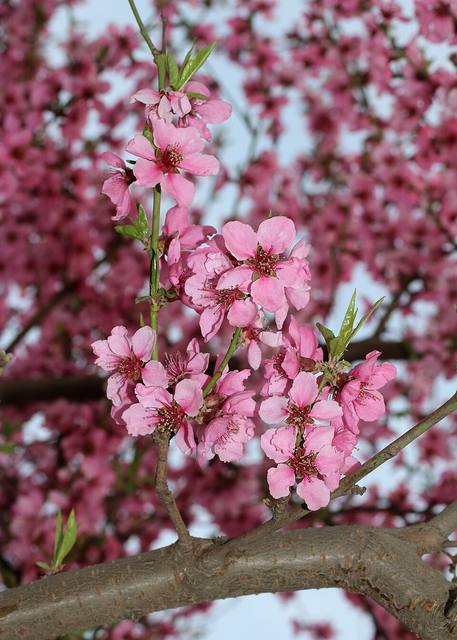
Photo: George Chernilevsky · CC BY-SA 4.0 · Wikimedia Commons

Peach
Prunus persica
Also called Nectarine
Tree · Family Rosaceae · Native to Northern China
A small deciduous tree with pink spring blossom and juicy summer fruit. It likes sun and warmth, and is often grown fan-trained or in a pot.
Toxic to cats and dogs
Toxic principle: Cyanogenic glycosides found in some species
Signs: Stems, leaves, seeds contain cyanide, particularly toxic in the process of wilting: brick red mucous membranes, dilated pupils, difficulty breathing, panting, shock
Care
Light
Full sun
Needs full sun and shelter. Early flowers are prone to frost, so a south wall helps. Shade gives poor fruit and weak growth.
Water
About every 7 days in the growing season, every 21 in the cool season
Water deeply every week in dry spells, especially while fruit swell. Established trees need less. Waterlogging in winter kills roots. Winter days refer to leafless trees in mild weather.
Water when the top 5 cm (2 in) of soil is dry
Humidity
Medium humidity
Outdoor air is fine. Wet spring weather and cold damp raise leaf curl, so shelter from rain helps.
Temperature
10 to 30 °C (50 to 86 °F)
Hardy to about -20 °C (-4 °F) dormant; flower buds die below -15 °C (5 °F). Best at 10 to 30 °C (50 to 86 °F). Needs winter chill.
Soil
Deep, fertile, well-drained loam, pH 6 to 7. It does not like wet, heavy soil; plant on a mound or in a raised bed.
Feeding
Mulch with compost in spring and feed with a balanced fertiliser in early spring. Avoid too much nitrogen, which makes soft growth.
Repotting
Not repotted in the ground. A potted tree needs a bigger pot every 2 to 3 years or topsoil refreshed each spring.
Pruning
Prune in spring after the buds swell, not in winter, to avoid silver leaf and canker. Cut out one in three old shoots, and thin the fruit to 10 cm (4 in) apart.
Propagation
Buy a grafted tree; peach seeds grow trees that do not match the parent. Stones germinate after a winter chill but give variable fruit.
Size
300 to 500 cm (118 to 197 in)
Fast growing
Outdoors
USDA zones 5 to 9
Grows outdoors in a sunny sheltered spot, fan-trained on a south wall in cool climates. Plant 4 to 5 m (13 to 16 ft) apart, less for dwarf trees.
Eating
Ripe flesh of the fruit
The stone (pit), seed kernel and leaves contain cyanide-producing compounds; do not eat the kernel and keep stones from pets.
Common problems
Red, thickened, curled leaves in spring
Peach leaf curl
Shelter from rain in winter to spring; remove affected leaves and spray in a cold, dry period.
Fruit drops while small
Natural thinning or drought
Thin the fruit yourself, keep watering even and protect from late frost.
Gum oozing from branches
Canker or borers
Prune out dead wood in dry summer weather and keep the tree healthy.
No fruit
Frost on blossom or no pollination
Cover blossom with fleece on cold nights; hand-pollinate with a soft brush.
Brown rot on ripe fruit
Fungal infection
Remove and bin affected fruit and pick regularly.
Did you know?
The peach is a close relative of the almond. A nectarine is a peach with a gene for smooth skin, not a separate species.
General care information for a typical plant. Conditions in your home or garden may need a different rhythm.
Not sure what your plant is?
Identify a plant from a photoSee this guide in the appKagn Plants also keeps your own plants with watering reminders, and its plant doctor reads what is wrong with one.
Updated 22 November 2026.