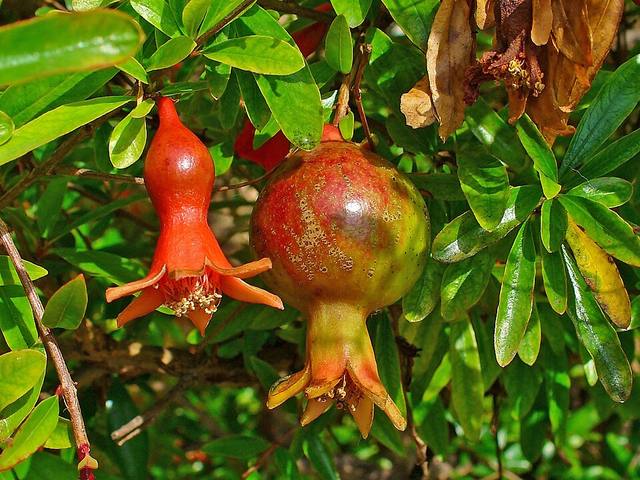
Photo: H. Zell · CC BY-SA 3.0 · Wikimedia Commons

Pomegranate
Punica granatum
Also called Pomegranate tree, Granada
Tree · Family Lythraceae · Native to Iran to northern India
A small, bushy tree with glossy leaves and orange-red flowers. It is grown for its red fruit, full of juicy seeds, and as an ornamental in hot, dry climates.
Not on the ASPCA's list: keep it out of reach of pets.
Care
Light
Full sun
Needs full sun, at least 6 to 8 hours. In shade it flowers and fruits poorly. Fruit sets best in a long, hot summer.
Water
About every 7 days in the growing season, every 21 in the cool season
Water deeply and let the soil dry between waterings, once it is established. It tolerates drought but fruit splits if a long dry spell is followed by heavy watering. Water far less when it loses its leaves in winter.
Water when the top 5 cm (2 in) of soil is dry
Humidity
Low humidity
Dry air is fine. Humid air invites fungal spots.
Temperature
18 to 35 °C (64 to 95 °F)
Grows best at 18 to 35 °C (64 to 95 °F). It takes dormant frost to about -10 °C (14 °F) but a late frost can kill the flowers.
Soil
A deep, well-drained loam. It tolerates poor and alkaline soil. A pH of 5.5 to 7.5 suits it. Avoid wet ground.
Feeding
Every 6 weeks in the growing season
Feed every 6 weeks in spring with a balanced feed. Too much nitrogen gives leaves but few flowers.
Repotting
Not usually repotted. A potted tree can be moved to a larger pot every 3 years in spring.
Pruning
Prune in late winter. Remove suckers, dead wood and crossing branches, and keep 3 to 5 main stems for a shrub shape.
Propagation
Take 25 cm (10 in) hardwood cuttings in winter, and root them in damp sandy soil. Seed grows slowly and varies a lot.
Size
200 to 500 cm (79 to 197 in)
Medium growth
Outdoors
USDA zones 8 to 10
Grows outdoors in full sun and warm, dry summers. It needs about 6 months of heat to ripen fruit. Space 3 to 5 m (10 to 16 ft) apart.
Eating
Seeds (arils) of the ripe fruit
The rind, bark and roots are not eaten.
Common problems
Flowers but no fruit
Cool summer or too much shade
Give full sun and a hot spot. Plants may take 3 years to fruit.
Fruit splits open
Uneven watering
Water evenly through the season, and do not flood after a dry spell.
Leaves yellow and drop
Overwatering or autumn
Normal in autumn. Otherwise water less.
Dark spots on fruit and leaves
Fungus in humid weather
Remove infected fruit and leaves, and give it more air.
Branches die back
Frost
Prune dead wood in spring, once new growth shows.
Did you know?
A single fruit holds hundreds of juicy seed coverings, called arils. The word grenade comes from the Old French name for the fruit.
General care information for a typical plant. Conditions in your home or garden may need a different rhythm.
Not sure what your plant is?
Identify a plant from a photoSee this guide in the appKagn Plants also keeps your own plants with watering reminders, and its plant doctor reads what is wrong with one.
Updated 22 November 2026.