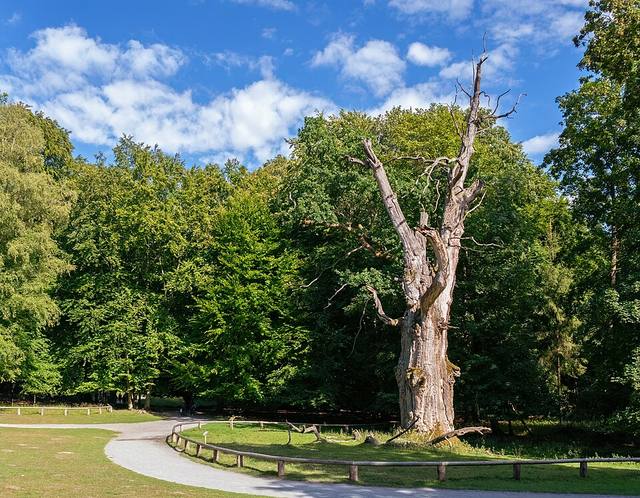
Photo: Radomianin · CC BY-SA 4.0 · Wikimedia Commons

English oak
Quercus robur
Also called Pedunculate oak, Common oak
Tree · Family Fagaceae · Native to Europe, Caucasus and Anatolia
A large, long-lived broadleaf tree with lobed leaves and acorns on long stalks. It is a majestic shade tree and supports more wildlife than almost any other tree in Europe.
Not on the ASPCA's list: keep it out of reach of pets.
Care
Light
Full sun
Needs full sun in an open spot with room to spread. In shade it grows tall and thin.
Water
About every 14 days in the growing season, every 30 in the cool season
Young trees need a deep soak every 1 to 2 weeks in the first 2 or 3 summers. Established trees need no watering. The winter figure is for a dry winter only; the tree is dormant.
Water young trees deeply every 1 to 2 weeks in dry weather
Humidity
Medium humidity
Outdoor humidity is no concern.
Temperature
8 to 28 °C (46 to 82 °F)
Hardy to about -30 °C (-22 °F). Grows best at 8 to 28 °C (46 to 82 °F). It loses its leaves in autumn.
Soil
Deep, moist, fertile loam or clay that drains in winter. It tolerates heavy soil. Avoid very dry, thin or waterlogged ground.
Feeding
Do not feed. A mulch of leaf mould in autumn is enough, kept clear of the trunk.
Repotting
Not grown in pots long term. Plant it in the ground as a small tree; oaks hate root disturbance.
Pruning
Prune lightly in winter only, removing dead or crossing wood. Never top it. Cutting in spring and summer risks disease and pests.
Propagation
Sow fresh acorns in autumn in a deep pot or the ground, because the taproot forms early. Protect the seedlings from mice and squirrels.
Size
2000 to 3000 cm (787 to 1181 in)
Slow growing
Outdoors
USDA zones 4 to 8
Needs a large garden or park: it grows to 20 to 30 m (65 to 100 ft) wide. Keep 15 m (50 ft) from buildings. It lives for hundreds of years.
Common problems
Leaves chewed to lace in spring
Oak leaf-roller and winter moth caterpillars
Usually harmless to a healthy tree. Grease bands help on a young tree.
White powder on leaves
Oak powdery mildew
Cosmetic. Rake and bin the fallen leaves in autumn.
Leaves brown early and branches die back
Drought, root damage or acute oak decline
Water young trees deeply, keep soil away from the trunk and ask a tree officer if branches ooze.
Round bumps on leaves or twigs
Gall wasps
Harmless. Leave them.
Lots of leaf drop in summer
Dry soil in a heat wave
Mulch and water deeply once a week in drought.
Did you know?
The Major Oak in Sherwood Forest, England, is thought to be 800 to 1,000 years old. English oaks do not usually bear acorns until about 40 years old.
General care information for a typical plant. Conditions in your home or garden may need a different rhythm.
Not sure what your plant is?
Identify a plant from a photoSee this guide in the appKagn Plants also keeps your own plants with watering reminders, and its plant doctor reads what is wrong with one.
Updated 22 November 2026.