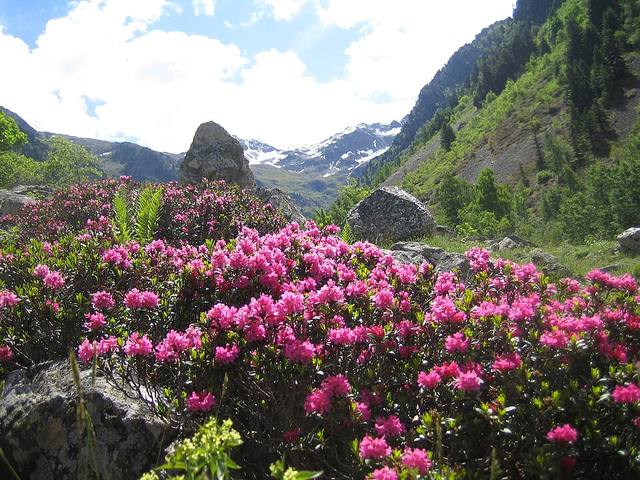
Photo: albert kok · CC BY 3.0 · Wikimedia Commons

Rhododendron
Rhododendron
Also called Azalea, Rosebay
Shrub · Family Ericaceae · Native to Asia, North America and Europe
A large group of evergreen and deciduous shrubs with spectacular spring flower clusters. Azaleas are a type of Rhododendron. It needs acid soil and does not suit alkaline gardens.
Toxic to cats and dogs
Toxic principle: Grayantoxin
Signs: Vomiting, diarrhea, hypersalivation, weakness, coma, hypotension, CNS depression, cardiovascular collapse and death. Ingestion of a few leaves can cause serious problems.
Care
Light
Part sun
Dappled shade or morning sun suits most. Too much hot sun scorches leaves and too much shade gives few flowers.
Water
About every 7 days in the growing season, every 21 in the cool season
The roots are shallow and fine, so keep the soil evenly damp but never soggy, especially in late summer when flower buds form. Use rainwater if your tap water is hard.
Water when the top 3 to 5 cm (1 to 2 in) of soil is dry
Humidity
Medium humidity
Appreciates a humid climate. Cold dry winds and hot dry air scorch the leaves.
Temperature
10 to 25 °C (50 to 77 °F)
Hardy range varies. Many are hardy to about -18 °C (0 °F) or lower, some tender ones are not. Check your plant's label.
Soil
Moist, humus-rich, well-drained soil that is acid, about pH 4.5 to 6. Add peat-free ericaceous compost and mulch with leaf mould. It fails and yellows in chalk and lime.
Feeding
Every 12 weeks in the growing season
Feed once or twice in spring with a feed for acid-loving plants. Do not feed after midsummer.
Repotting
Not repotted when in the ground. Potted plants need repotting every 2 to 3 years into ericaceous compost.
Pruning
Little pruning needed. Snap off faded flower heads gently, without harming the buds below. Cut old, leggy plants back hard after flowering, in spring.
Propagation
Take 8 to 10 cm (3 to 4 in) cuttings of semi-ripe shoots in summer. Layering a low branch also works. Both are slow.
Size
60 to 300 cm (24 to 118 in)
Slow growing
Outdoors
USDA zones 5 to 8
Plant in acid soil with the root ball level with the surface, because the roots are shallow. Shelter from wind. Dwarf types suit pots.
Common problems
Yellow leaves with green veins
Soil too alkaline (iron shortage)
Feed with a feed for acid-loving plants and water with rainwater. Test the pH.
Buds turn brown, do not open
Bud blast fungus or drought in late summer
Remove affected buds and water deeply in late summer.
Leaves curl and look brown in winter
Cold, dry wind or frozen roots
Mulch and shelter. Leaves often recover in spring.
Sticky or sooty leaves
Aphids, lace bugs or scale
Spray them off or wipe with soapy water.
Plant wilts in a wet spot
Root rot (phytophthora)
Improve drainage or plant in raised ground. Do not plant too deep.
Did you know?
Rhododendron arboreum is the national flower of Nepal, where tree-sized plants flower on hillsides in spring.
General care information for a typical plant. Conditions in your home or garden may need a different rhythm.
Not sure what your plant is?
Identify a plant from a photoSee this guide in the appKagn Plants also keeps your own plants with watering reminders, and its plant doctor reads what is wrong with one.
Updated 22 November 2026.