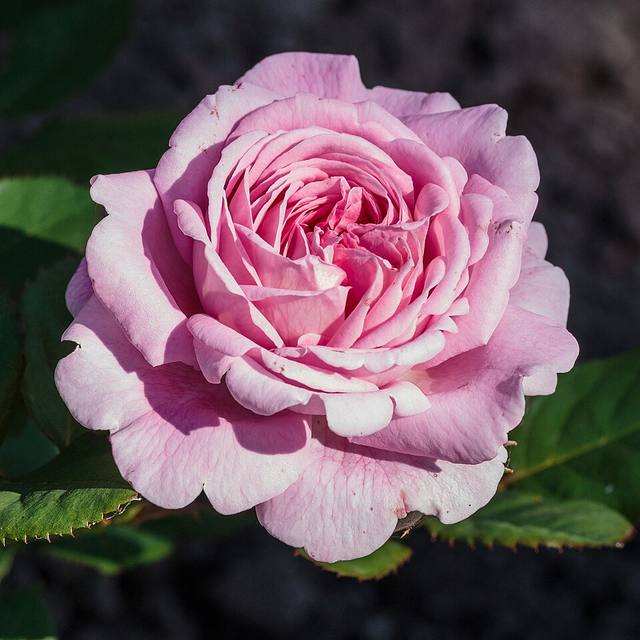
Photo: Agnes Monkelbaan · CC BY-SA 4.0 · Wikimedia Commons

Rose
Rosa
Also called Garden rose, Hybrid tea rose, Shrub rose
Garden flower · Family Rosaceae · Native to Northern Hemisphere (hybrids of garden origin)
A thorny shrub grown for fragrant flowers in nearly every colour. Garden roses are mostly hybrids, and many are tough and repeat-flowering.
The ASPCA lists this plant as non-toxic to cats and dogs
Care
Light
Full sun
At least 6 hours of direct sun a day. Weak growth, few flowers and mildew mean too much shade.
Water
About every 5 days in the growing season, every 21 in the cool season
Water deeply once or twice a week in summer at the base, not on the leaves. Wet leaves invite black spot and mildew. Water new roses more often.
Water when the top 5 cm (2 in) of soil is dry
Humidity
Medium humidity
Needs good air flow. Damp, still air promotes mildew and black spot.
Temperature
10 to 28 °C (50 to 82 °F)
Grows best at 10 to 28 °C (50 to 82 °F). Most hybrids survive winters down to -20 °C (-4 °F); hardiness varies.
Soil
Rich, well-drained soil with lots of compost, pH 6 to 7. Dig a wide planting hole and avoid soggy ground.
Feeding
Every 6 weeks in the growing season
Feed in early spring and again after the first flush, using rose or balanced fertiliser. Stop 6 weeks before frost.
Repotting
Not repotted often. Container roses need fresh soil every 3 to 4 years in early spring.
Pruning
Prune in late winter or early spring: remove dead or crossing stems and cut back to an outward-facing bud. Deadhead repeat bloomers.
Propagation
Beginners can take hardwood cuttings in autumn and push them into soil; success is moderate. Many hybrids are budded onto rootstock, so cuttings may differ.
Size
40 to 200 cm (16 to 79 in)
Medium growth
Outdoors
USDA zones 4 to 9
Plant in sun with space for air flow, 60 to 120 cm (2 to 4 ft) apart. Hardiness depends on the type.
Eating
Petals and rose hips
Only eat roses grown without sprays. Thorns can injure.
Common problems
Black spots on leaves
Black spot fungus
Remove affected leaves, water at the base and prune for air flow.
White powdery coating
Powdery mildew
Improve air flow, remove infected leaves, avoid overhead watering.
Clusters of tiny green insects
Aphids
Wash off with water or insecticidal soap.
Few flowers
Too much shade or poor feeding
Move to sun, feed in spring and deadhead.
Yellow leaves
Too wet or short of nutrients
Check drainage and feed.
Did you know?
Rose hips are among the richest plant sources of vitamin C, and in World War II British children gathered them for syrup.
General care information for a typical plant. Conditions in your home or garden may need a different rhythm.
Not sure what your plant is?
Identify a plant from a photoSee this guide in the appKagn Plants also keeps your own plants with watering reminders, and its plant doctor reads what is wrong with one.
Updated 22 November 2026.