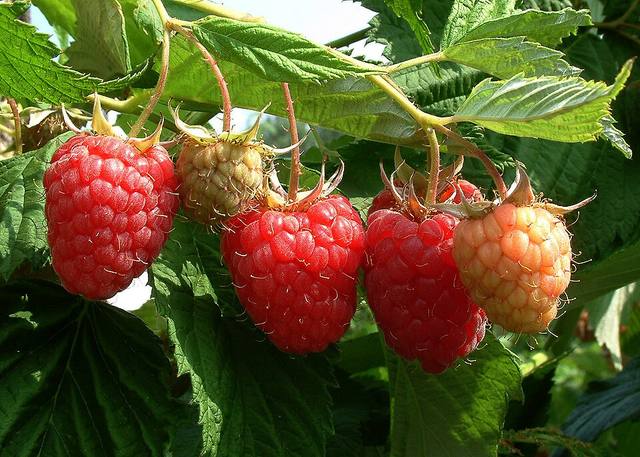
Photo: Kollányi Gábor · CC BY-SA 3.0 · Wikimedia Commons

Raspberry
Rubus idaeus
Also called Red raspberry, European raspberry
Shrub · Family Rosaceae · Native to Europe and northern Asia
A cane fruit that sends up new canes each year and crops on them. It is hardy and fruits in summer or autumn depending on the variety.
Not on the ASPCA's list: keep it out of reach of pets.
Care
Light
Full sun
Best in full sun, but part shade is OK. Shade gives thin canes and less fruit. Scorched, brown leaf edges mean heat and drought.
Water
About every 7 days in the growing season, every 14 in the cool season
Water in dry spells, about once a week, most when berries swell. Mulch to keep roots moist. Waterlogged soil kills plants, the commonest cause of root rot.
Water when the top 3 cm (1 in) of soil is dry
Humidity
Medium humidity
Outdoor air is fine. Damp, crowded canes bring grey mould.
Temperature
10 to 25 °C (50 to 77 °F)
Hardy to about -30 °C (-22 °F) when dormant. Grows best at 10 to 25 °C (50 to 77 °F). Fruit sets poorly in hot summers above 30 °C (86 °F).
Soil
Fertile, well-drained, slightly acid soil with plenty of compost, pH 6 to 6.5. It dislikes waterlogged soil.
Feeding
Mulch with compost or manure each spring. Add a balanced fertiliser in early spring if growth is weak.
Repotting
Not repotted: plant bare-root canes in winter. Cut out old canes, replant rooted suckers every 8 to 10 years in fresh soil.
Pruning
Summer types: cut canes that fruited to the ground after harvest. Autumn types: cut all canes to the ground in late winter. Thin new canes to 8 per metre.
Propagation
Dig up suckers growing from the roots in autumn or winter and replant them. Buy certified virus-free canes for a new row.
Size
120 to 200 cm (47 to 79 in)
Fast growing
Outdoors
USDA zones 3 to 9
Hardy for a sunny bed with a wire support, 45 cm (18 in) apart. Fruits on 1-year-old canes. Plant in late autumn to early spring.
Eating
Ripe berries
Eat fresh, frozen or cooked. Leaves are sometimes used for tea.
Common problems
Crumbly, small fruit
Raspberry beetle or drought
Water in fruiting, pick often and use fine mesh.
Orange or yellow leaves in patches
Virus or iron deficiency
Remove affected plants if the leaves are mottled; use compost and chelated iron.
Grey fuzzy mould on fruit
Botrytis
Thin canes for air flow and pick fruit regularly.
Canes with purple blotches that die
Cane blight or spur blight
Cut out the diseased canes and thin the row.
Suckers popping up everywhere
Natural spreading
Dig out the ones outside the row or use them as new plants.
Did you know?
A raspberry is not a single fruit but many tiny drupelets, each around a seed, joined together.
General care information for a typical plant. Conditions in your home or garden may need a different rhythm.
Not sure what your plant is?
Identify a plant from a photoSee this guide in the appKagn Plants also keeps your own plants with watering reminders, and its plant doctor reads what is wrong with one.
Updated 22 November 2026.