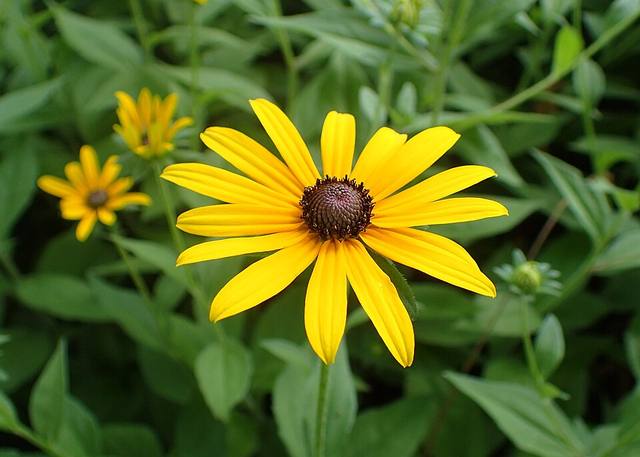
Photo: Krzysztof Ziarnek, Kenraiz · CC BY-SA 4.0 · Wikimedia Commons

Black-eyed Susan
Rudbeckia hirta
Also called Gloriosa daisy, Brown-eyed Susan, Coneflower
Garden flower · Family Asteraceae · Native to North America
A bright yellow daisy with a dark brown centre that flowers from midsummer to autumn. It is short-lived but tough, grows easily from seed and feeds bees and goldfinches.
Not on the ASPCA's list: keep it out of reach of pets.
Care
Light
Full sun
Full sun, 6 or more hours. In part shade it flowers but grows leggy and floppier.
Water
About every 7 days in the growing season, every 14 in the cool season
Water new plants weekly. Established plants take drought well. In pots water when the mix is dry. Overwatering in cool weather causes root rot. It is dormant or dead above ground in winter.
Water when the top 5 cm (2 in) of soil is dry
Humidity
Low humidity
Tolerates dry air. Crowded plants in humid weather can get mildew.
Temperature
10 to 29 °C (50 to 84 °F)
Hardy to about -29 °C (-20 °F). Grows best at 10 to 29 °C (50 to 84 °F) and handles heat.
Soil
Average, well-drained soil. It tolerates clay and poor soil, but not waterlogging.
Feeding
No regular feeding needed. A little compost in spring is enough. Rich soil makes it flop.
Repotting
Every 3 years
Divide every 2 to 3 years in spring if the clump is crowded. Plants are often short-lived, so let some seed fall.
Pruning
Cut off spent flowers to prolong the display. Leave a few seedheads at the end of the season for birds and self-seeding. Cut down in late winter.
Propagation
Sow seed in spring on the surface, or divide clumps in spring. Plants flower in the first year if sown early.
Size
30 to 90 cm (12 to 35 in)
Fast growing
Outdoors
USDA zones 3 to 9
Hardy in zones 3 to 9. A biennial or short-lived perennial. Space plants 30 to 45 cm (12 to 18 in) apart in full sun.
Common problems
Plant dies after two or three years
Short-lived by nature
Let it drop seed or sow new plants every few years.
Stems flop in wet weather
Rich soil or too much shade
Move to poorer soil in full sun. Stake tall types.
White powder on leaves
Powdery mildew
Give more air and water at the base.
Black spots on leaves
Leaf spot fungus
Remove affected leaves and clear them in autumn.
Seedlings pop up everywhere
Self-seeding
Pull unwanted seedlings in spring or cut seedheads before they ripen.
Did you know?
Black-eyed Susan is the state flower of Maryland, in the United States.
General care information for a typical plant. Conditions in your home or garden may need a different rhythm.
Not sure what your plant is?
Identify a plant from a photoSee this guide in the appKagn Plants also keeps your own plants with watering reminders, and its plant doctor reads what is wrong with one.
Updated 22 November 2026.