Photo: Fab5669 · CC BY-SA 4.0 · Wikimedia Commons

Weeping willow
Salix babylonica
Also called Babylon willow, Chinese weeping willow
Tree · Family Salicaceae · Native to Northern China
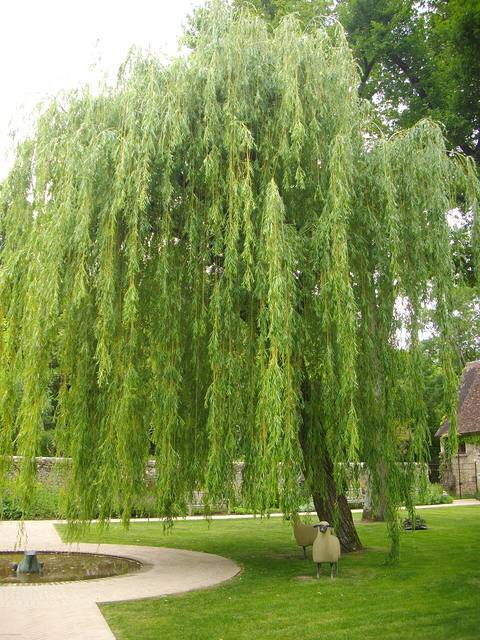
A fast, graceful tree with long, trailing branches that sweep the ground. It loves water and is planted beside lakes and ponds.
Not on the ASPCA's list: keep it out of reach of pets.
Care
Light
Full sun
Needs full sun, with some tolerance of light shade. It grows fast and thin in shade.
Water
About every 3 days in the growing season, every 14 in the cool season
It wants moist or wet soil and drinks a great deal. Water young trees deeply every few days in hot dry spells, and in winter only if the soil is dry.
Water young trees every 2 to 3 days in hot dry weather
Humidity
Medium humidity
Outdoor humidity is no concern.
Temperature
10 to 28 °C (50 to 82 °F)
Hardy to about -23 °C (-10 °F). Grows best at 10 to 28 °C (50 to 82 °F). The leaves fall in autumn.
Soil
Moist to wet soil, including clay and stream banks. Neutral to slightly acid. It tolerates short floods but not dry sand.
Feeding
Do not feed. It grows fast without help and soft growth breaks easily.
Repotting
Plant it in the ground. It grows too large and thirsty for a pot.
Pruning
Trim the dangling branches to keep the crown tidy and remove dead wood in late winter. Never allow roots to reach drains: keep the tree out of sewer lines.
Propagation
Easy from hardwood cuttings: push a 30 cm (12 in) pencil-thick twig into moist soil in winter and it roots by spring.
Size
1000 to 2000 cm (394 to 787 in)
Fast growing
Outdoors
USDA zones 6 to 8
Needs 10 m (33 ft) of space and a spot 15 m (50 ft) from buildings and drains. Best by a pond or damp field. It lives about 30 to 50 years.
Common problems
Roots enter drains and cracks
Searching for water
Plant far from pipes, walls and paths. Choose another tree for small gardens.
Branches break in wind
Soft, brittle wood
Remove weak limbs. Plant in a sheltered place.
Leaves with dark spots and early leaf drop
Willow anthracnose or rust
Rake and bin the fallen leaves. Avoid overhead watering.
Dying twigs and cankers
Canker or scab fungus
Cut out affected wood into healthy tissue. Keep the tree well-watered.
Short life
Normal for willows
Plan to replace the tree in 30 to 50 years.
Did you know?
Despite the name 'babylonica' it is native to China, not Babylon. Linnaeus believed it was the willow of Psalm 137 in Babylon, which was probably a poplar.
General care information for a typical plant. Conditions in your home or garden may need a different rhythm.
Not sure what your plant is?
Identify a plant from a photoSee this guide in the appKagn Plants also keeps your own plants with watering reminders, and its plant doctor reads what is wrong with one.
Updated 22 November 2026.