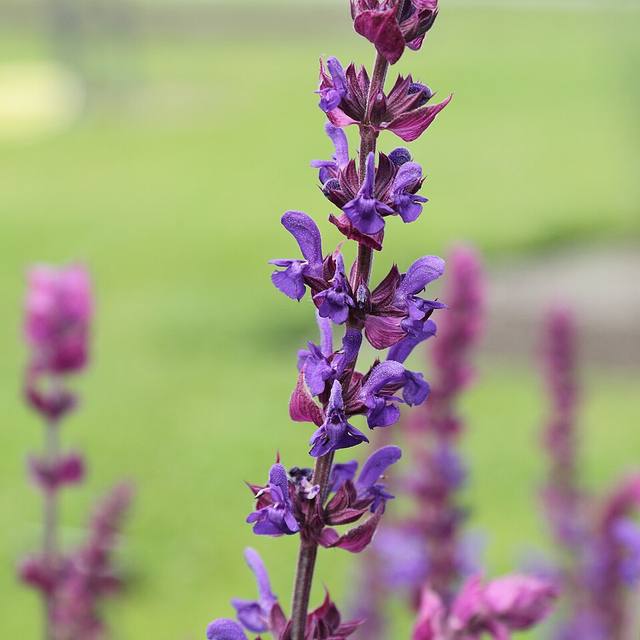
Photo: C T Johansson · CC BY-SA 3.0 · Wikimedia Commons

Woodland sage
Salvia nemorosa
Also called Balkan clary, Perennial salvia, Meadow sage
Garden flower · Family Lamiaceae · Native to Central Europe to Central Asia
A tough perennial with upright spikes of violet-blue flowers over grey-green leaves. It flowers from early summer, is liked by bees and tolerates dry soil.
Not on the ASPCA's list: keep it out of reach of pets.
Care
Light
Full sun
Needs full sun. In shade it flops and flowers less.
Water
About every 10 days in the growing season, every 30 in the cool season
Water new plants weekly for the first summer. Established plants are drought tolerant. Water in the ground only in long dry spells. Wet winter soil rots the roots.
Water when the top 5 cm (2 in) of soil is dry
Humidity
Low humidity
Copes with dry air. Crowded, humid plants may get mildew.
Temperature
5 to 27 °C (41 to 81 °F)
Hardy to about -34 °C (-30 °F). Grows best at 5 to 27 °C (41 to 81 °F).
Soil
Well-drained soil, even poor or stony. It dislikes heavy, wet clay. Neutral to slightly alkaline soil is fine.
Feeding
No regular feeding needed. A little compost in spring is enough. Rich soil makes it floppy.
Repotting
Every 4 years
Divide every 3 to 5 years in spring if the centre dies out or flowering falls.
Pruning
Cut off spent flower spikes to get a second flush. Cut the whole plant back by half in midsummer. Cut down to 10 cm (4 in) in late winter or early spring.
Propagation
Divide clumps in spring or take 8 cm (3 in) softwood cuttings in late spring. Seed is slow and varies.
Size
40 to 90 cm (16 to 35 in)
Medium growth
Outdoors
USDA zones 4 to 9
Hardy in zones 4 to 9. Space plants 30 to 45 cm (12 to 18 in) apart in a sunny border.
Common problems
Plant flops open in the centre
Too rich soil or shade
Cut back hard after first flowering and plant in poorer soil in full sun.
Few flowers after the first flush
Spent spikes not removed
Cut off faded spikes down to the leaves for a second flush.
White coating on leaves
Powdery mildew
Give more space and sun. Cut back and bin affected foliage.
Dies in winter
Wet, heavy soil
Improve drainage with grit or raise the bed.
Sticky shoot tips
Aphids
Rinse off with water and let ladybirds help.
Did you know?
The name nemorosa means 'of the woods', yet the plant grows best in open, dry meadows in the wild and the garden.
General care information for a typical plant. Conditions in your home or garden may need a different rhythm.
Not sure what your plant is?
Identify a plant from a photoSee this guide in the appKagn Plants also keeps your own plants with watering reminders, and its plant doctor reads what is wrong with one.
Updated 22 November 2026.