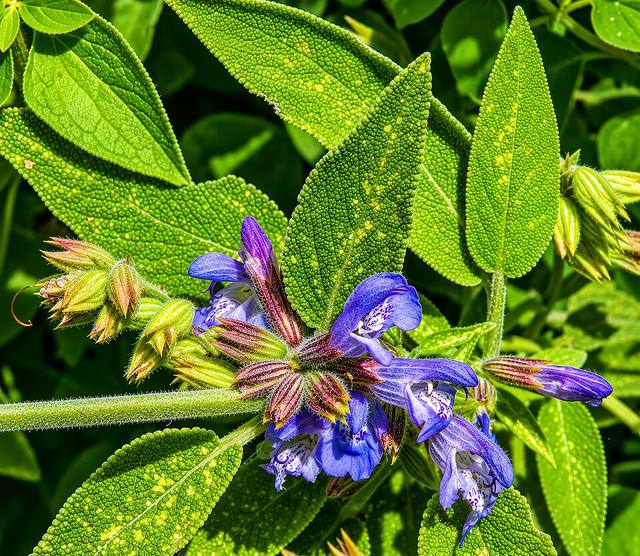
Photo: Didier Descouens · CC BY-SA 4.0 · Wikimedia Commons

Common sage
Salvia officinalis
Also called Garden sage, Sage
Herb · Family Lamiaceae · Native to Northern Mediterranean
A woody, grey-green herb with soft, wrinkly leaves used with meat, stuffing and in sage butter. It is hardy and easy, and bees love the purple spring flowers.
The ASPCA lists this plant as non-toxic to cats and dogs
Care
Light
Full sun
Needs full sun for the best flavour. In shade it grows thin and floppy and is prone to mould.
Water
About every 10 days in the growing season, every 21 in the cool season
Water well, then let it dry. It stores a little water in its woody stems. Wet feet in winter kills it more often than cold does.
Water when the top 4 cm (1.5 in) of soil is dry
Humidity
Low humidity
Dry air suits it. Crowded plants in damp weather get mildew.
Temperature
10 to 30 °C (50 to 86 °F)
Hardy to about -15 °C (5 °F). Grows best at 10 to 30 °C (50 to 86 °F). It dislikes cold, wet winters more than frost.
Soil
Light, gritty, very well-drained soil, pH 6 to 7.5. Add grit to heavy soils or grow it in a pot or raised bed.
Feeding
Do not feed. Rich soil makes soft, bland leaves. Poor soil gives better flavour.
Repotting
Every 3 years
Repot every 2 to 3 years in spring into a bigger pot with gritty mix. In the ground, replace old woody plants every 4 to 5 years.
Pruning
Trim lightly after flowering and again in spring to keep it bushy. Do not cut into old bare wood, which seldom regrows.
Propagation
Take 8 to 10 cm (3 to 4 in) cuttings from non-flowering shoots in late spring and root in gritty compost. Layering also works.
Size
40 to 80 cm (16 to 31 in)
Medium growth
Outdoors
USDA zones 5 to 9
Perennial shrub for a sunny, sheltered, well-drained spot, 45 to 60 cm (18 to 24 in) apart. Replace plants after 4 to 5 years.
Eating
Leaves, fresh or dried
Use in food amounts as a herb.
Common problems
Yellow leaves, mushy stems
Wet roots
Water less and move to a gritty, well-drained spot.
Grey fuzz on leaves
Powdery mildew
Space plants, water at the base and remove affected stems.
Bare, woody centre
Old plant
Take cuttings now and replace the old plant.
Leggy, floppy growth
Too little sun
Move to a sunnier place and trim lightly.
Plant dies over winter
Wet cold soil
Add grit, plant on a mound and avoid winter feeding.
Did you know?
The name Salvia comes from the Latin salvare, 'to heal'. Sage leaves were an old remedy and are still a classic with roast pork and sausage.
General care information for a typical plant. Conditions in your home or garden may need a different rhythm.
Not sure what your plant is?
Identify a plant from a photoSee this guide in the appKagn Plants also keeps your own plants with watering reminders, and its plant doctor reads what is wrong with one.
Updated 22 November 2026.