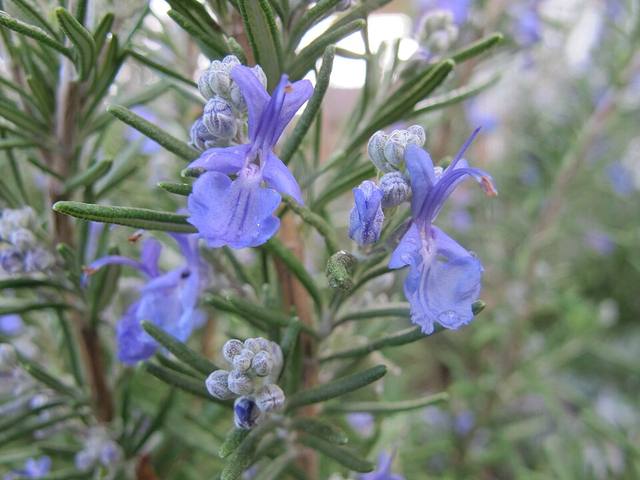
Photo: Margalob · CC BY-SA 4.0 · Wikimedia Commons

Rosemary
Salvia rosmarinus
Also called Common rosemary, Garden rosemary
Herb · Family Lamiaceae · Native to Mediterranean coast
An evergreen Mediterranean shrub with needle-like, resinous leaves used in cooking. It needs sun and sharp drainage, and is often lost to wet roots indoors.
The ASPCA lists this plant as non-toxic to cats and dogs
Care
Light
Full sun
Full sun, at least 6 hours, a south window indoors. Leggy growth and fewer needles mean too little light.
Water
About every 10 days in the growing season, every 21 in the cool season
Water deeply, then let it dry out well. Wet roots are the commonest killer, especially indoors in winter. A plant in the ground needs water only in long dry spells.
Water when the top 3 to 5 cm (1 to 2 in) of soil is dry
Humidity
Low humidity
Dry, airy conditions are best. Stuffy, humid rooms invite powdery mildew; give it airflow.
Temperature
10 to 30 °C (50 to 86 °F)
Best at 10 to 30 °C (50 to 86 °F). Hardy to about -10 °C (14 °F) outside, more for some types, but it hates wet cold.
Soil
Gritty, sandy, very well-drained soil, pH 6 to 8, such as cactus mix with extra grit. A terracotta pot helps it dry.
Feeding
Every 12 weeks in the growing season
Feed lightly, with a half-strength feed once or twice in spring and summer. Rich soil makes soft growth with less flavour.
Repotting
Every 2 years
Repot every 2 years in spring into a pot only one size bigger. Do not disturb an established plant in the ground.
Pruning
Trim lightly after flowering or in spring, taking soft green tips. Do not cut into old, bare wood, as it seldom regrows.
Propagation
Take 10 cm (4 in) soft tip cuttings in late spring or summer, strip the lower leaves and root in gritty damp mix. Roots form in 4 to 8 weeks.
Size
60 to 180 cm (24 to 71 in)
Medium growth
Outdoors
USDA zones 7 to 10
Hardy shrub in a sunny, sheltered spot with sharp drainage, 60 to 90 cm (2 to 3 ft) apart. In cold places grow it in a pot and shelter it.
Eating
Leaves and flowers
Common problems
Brown, dry needles from the tips
Overwatering or root rot
Let the soil dry, check the drainage and repot into gritty mix.
White powder on needles
Powdery mildew
Improve airflow, water the soil and avoid crowding.
Leggy, weak growth
Too little light
Move to full sun and trim the tips.
Needles drop
Drought or cold, wet roots
Water deeply but less often and give better drainage.
Sticky leaves, white fluff
Pests
Wipe off or wash off and repeat weekly.
Did you know?
The old name Rosmarinus means 'dew of the sea' in Latin, as it grows wild by the Mediterranean coast. It was moved into the sage genus when DNA tests showed they are related.
General care information for a typical plant. Conditions in your home or garden may need a different rhythm.
Not sure what your plant is?
Identify a plant from a photoSee this guide in the appKagn Plants also keeps your own plants with watering reminders, and its plant doctor reads what is wrong with one.
Updated 22 November 2026.