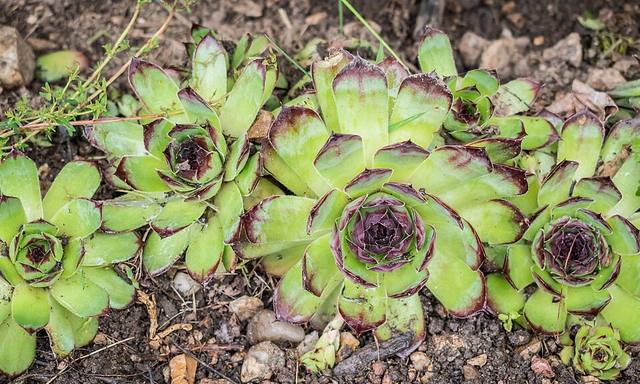
Photo: Krzysztof Golik · CC BY-SA 4.0 · Wikimedia Commons

Houseleek
Sempervivum tectorum
Also called Hen and chicks, Common houseleek, Roof houseleek
Succulent or cactus · Family Crassulaceae · Native to Mountains of southern and central Europe
A hardy rosette succulent that spreads by small offsets around the parent. It is grown in pots, rockeries and even on roofs, and survives hard frost and drought.
Not on the ASPCA's list: keep it out of reach of pets.
Care
Light
Full sun
Full sun, at least 6 hours. In shade the rosettes stretch out and lose their tight shape and colour. Needs bright light indoors, so a sunny sill or better outdoors all year.
Water
About every 14 days in the growing season, every 35 in the cool season
Water deeply, then let the mix dry out fully. It stores water in its leaves and rots if kept damp. Outdoors it needs little extra water. In winter, rain is usually enough.
Water when the soil is completely dry, then soak
Humidity
Low humidity
Happy in dry air. Humidity is no problem, but wet, cold air in winter combined with soggy soil can cause rot.
Temperature
5 to 28 °C (41 to 82 °F)
Fully hardy to about -35 °C (-31 °F). Grows best at 5 to 28 °C (41 to 82 °F). Keep it cool in winter even indoors.
Soil
Very gritty, fast-draining mix, such as cactus compost with extra grit or perlite. It grows in almost no soil. Slightly acidic to neutral pH.
Feeding
Every 8 weeks in the growing season
Feed once or twice in spring with a weak, low-nitrogen fertiliser, or not at all. Poor soil keeps the rosettes compact.
Repotting
Every 2 years
Repot only when offsets crowd the pot, every 2 years or so. Use a wide, shallow pot with drainage holes.
Pruning
Remove dead lower leaves and the flower stem once the rosette that flowered has died.
Propagation
Twist off an offset with a little root and set it on gritty mix. Water lightly after a week. Offsets root easily at any time of the growing season.
Size
5 to 15 cm (2 to 6 in)
Medium growth
Outdoors
USDA zones 3 to 8
Grows in full sun on dry, poor soil in rock gardens, walls and containers. Space rosettes 10 to 15 cm (4 to 6 in) apart; it fills gaps itself.
Common problems
Rosette turns brown and mushy
Overwatering or wet winter soil
Remove the rotting rosette, let the plant dry and move to a freer-draining mix.
Stretched, loose rosette
Too little light
Move to full sun; the new growth will be tight again.
Rosette dies after flowering
Normal life cycle
Each rosette flowers once and dies. Remove it; the offsets carry on.
Dry, shrivelled outer leaves
Natural ageing or drought
Pull off old leaves. Water if the whole rosette looks wrinkled.
Mealybugs between leaves
Sap-sucking pest
Dab with a damp cotton bud and isolate the plant.
Did you know?
Its Latin name tectorum means 'of roofs'. It was grown on roof tiles in Europe, with a belief that it protected the house from lightning.
General care information for a typical plant. Conditions in your home or garden may need a different rhythm.
Not sure what your plant is?
Identify a plant from a photoSee this guide in the appKagn Plants also keeps your own plants with watering reminders, and its plant doctor reads what is wrong with one.
Updated 22 November 2026.