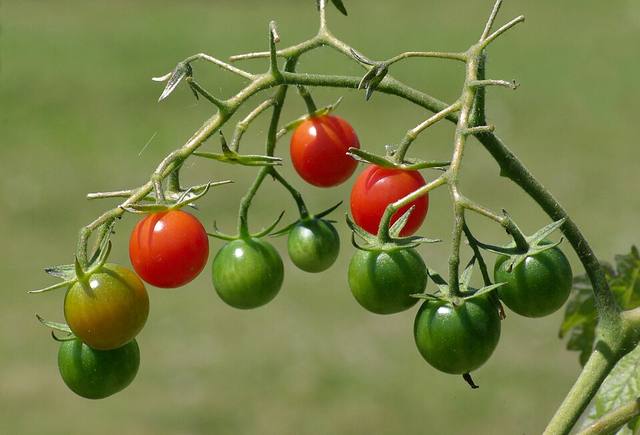
Photo: JLPC · CC BY-SA 3.0 · Wikimedia Commons

Tomato
Solanum lycopersicum
Also called Garden tomato, Cherry tomato
Vegetable · Family Solanaceae · Native to Western South America
A warm-season vegetable vine grown for juicy fruit. It is among the most popular crops in home gardens and pots.
Toxic to cats and dogs
Toxic principle: Solanine
Signs: Drooling, loss of appetite, severe stomach upset, depression, weakness, dilated pupils, slow heart rate. ASPCA: ripe fruit is non-toxic
Care
Light
Full sun
Full sun, 6 to 8 hours a day. In shade the plants are spindly and fruit is sparse and late.
Water
About every 2 days in the growing season, every 7 in the cool season
Water deeply and steadily, at the base. Swings between dry and wet split the fruit and cause blossom end rot. Pots may need water daily in hot weather.
Water when the top 2.5 cm (1 in) of soil is dry
Humidity
Medium humidity
Needs air flow. Damp, still air promotes blight and leaf mould, so water the soil, not the leaves.
Temperature
18 to 30 °C (64 to 86 °F)
Best at 18 to 30 °C (64 to 86 °F). Frost kills it, and fruit setting fails above 35 °C (95 °F) or below 10 °C (50 °F).
Soil
Rich, well-drained soil with plenty of compost, pH 6 to 6.8. Use a large pot, at least 20 litres (5 gallons), for most types.
Feeding
Every 2 weeks in the growing season
Feed every 2 weeks with a tomato fertiliser once the first flowers set. Too much nitrogen gives leaves not fruit.
Repotting
Grown as an annual: start with fresh soil each year and rotate beds so tomatoes do not follow tomatoes or potatoes.
Pruning
Tall (indeterminate) types: pinch out side shoots and tie to a stake. Bush types need little pruning. Remove the lower leaves that touch the soil.
Propagation
Sow seeds indoors 6 to 8 weeks before the last frost, then plant out when it is warm. Side shoots also root in water.
Size
60 to 200 cm (24 to 79 in)
Fast growing
Outdoors
USDA zones 2 to 11
Grown as a summer annual almost everywhere. Plant out after the last frost, 45 to 60 cm (18 to 24 in) apart, with support.
Eating
Ripe fruit
Leaves, stems and green fruit contain toxins; only eat ripe fruit.
Common problems
Dark, sunken base of fruit
Blossom end rot from uneven watering
Water evenly and mulch; do not just add calcium.
Cracked fruit
Irregular watering
Water evenly and regularly.
Brown leaf spots and fruit rot
Early or late blight
Remove infected leaves, water at the base and space plants for air flow.
Curled or yellow leaves
Heat, overwatering or nutrient shortage
Check watering and feed regularly; rolled leaves in heat are often harmless.
Flowers dropping
Heat or cold nights
Keep plants evenly watered; fruit set returns in mild weather.
Did you know?
The tomato is botanically a berry, and the first tomatoes in Europe were grown as ornamentals because many people feared the fruit was poisonous.
General care information for a typical plant. Conditions in your home or garden may need a different rhythm.
Not sure what your plant is?
Identify a plant from a photoSee this guide in the appKagn Plants also keeps your own plants with watering reminders, and its plant doctor reads what is wrong with one.
Updated 22 November 2026.