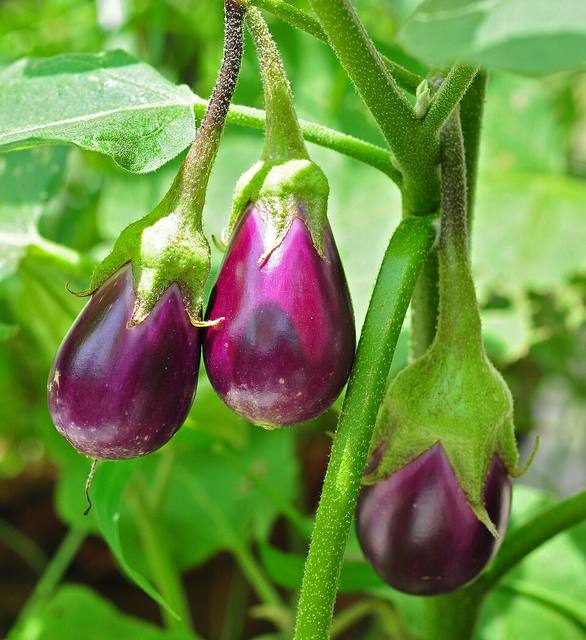
Photo: Joydeep · CC BY-SA 3.0 · Wikimedia Commons

Aubergine
Solanum melongena
Also called Eggplant, Brinjal, Garden egg
Vegetable · Family Solanaceae · Native to South and Southeast Asia
A heat-loving plant with glossy purple, white or striped fruit, treated as an annual in cool climates. It needs a long warm summer, a greenhouse or a hot spot.
The ASPCA lists a close relative, black Nightshade (Solanum nigrum), as toxic to cats and dogs: treat this plant the same.
Care
Light
Full sun
Needs full sun and warmth. In shade it flowers but sets little fruit. Pale, yellow leaves in a cool spot are a sign that it needs warmth.
Water
About every 4 days in the growing season, every 10 in the cool season
Water deeply and regularly while it is flowering and fruiting. Dry spells drop flowers. In a pot, it may need water daily in heat. Winter days apply only if it is grown as a perennial indoors.
Water when the top 3 cm (1 in) of soil is dry
Humidity
Medium humidity
Outdoor air is fine. In a dry greenhouse, red spider mite thrives, so damp the floor.
Temperature
20 to 32 °C (68 to 90 °F)
Damaged below about 10 °C (50 °F) and killed by frost. Grows best at 20 to 32 °C (68 to 90 °F). Fruit set stops below about 15 °C (59 °F) at night.
Soil
Rich, well-drained soil with plenty of compost, pH 6 to 6.8. In pots use a large (30 cm / 12 in) container.
Feeding
Every 2 weeks in the growing season
Feed every 2 weeks with a tomato-style, potassium-rich fertiliser once the first fruit sets.
Repotting
Not repotted if grown as an annual: move the seedling to its final pot once, 30 cm (12 in) wide. Do not let roots dry out.
Pruning
Pinch out the tip when the plant is 30 cm (12 in) tall to make it bushy. Thin to 4 to 6 fruit per plant. Cut fruit with the stalk.
Propagation
Sow seed indoors 8 to 10 weeks before the last frost at 21 to 27 °C (70 to 80 °F), then plant out in warm weather.
Size
60 to 120 cm (24 to 47 in)
Medium growth
Outdoors
USDA zones 10 to 12
Frost-tender: treat as an annual and plant out only when nights stay above 12 °C (54 °F). Grow it in a greenhouse in cool climates.
Eating
The ripe fruit, cooked
Leaves, stems and green parts are poisonous. Eat only ripe fruit and cook it; raw fruit is bitter.
Common problems
Flowers drop without fruit
Cold, heat or dry soil
Keep it warm and evenly watered; hand-pollinate by shaking flowers.
Yellow leaves with fine webs
Red spider mite
Mist, wash leaves with water and keep the air less dry.
White flies and sticky leaves
Whitefly
Hang yellow sticky traps and wash off leaves.
Wilting leaves, yellow in patches
Verticillium wilt
Pull the plant and bin it; grow in fresh soil or pots next year.
Dull, bitter, seedy fruit
Picked too late
Pick when the skin is glossy and springs back when pressed.
Did you know?
Aubergine is related to the tomato and potato; wild forms had small, spiny, white fruit, which is why one name in English is 'eggplant'.
General care information for a typical plant. Conditions in your home or garden may need a different rhythm.
Not sure what your plant is?
Identify a plant from a photoSee this guide in the appKagn Plants also keeps your own plants with watering reminders, and its plant doctor reads what is wrong with one.
Updated 22 November 2026.