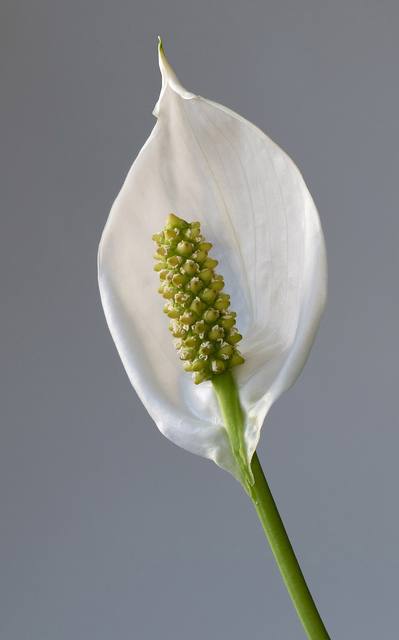
Photo: W.carter · CC BY-SA 4.0 · Wikimedia Commons

Peace lily
Spathiphyllum wallisii
Also called Spath, Closet plant, White sails
Houseplant · Family Araceae · Native to Colombia and Venezuela
A dark-leaved plant with white, hood-like flowers. It handles shade and tells you clearly when it is thirsty by wilting.
Toxic to cats and dogs
Toxic principle: Insoluble calcium oxalates
Signs: Oral irritation, burning of mouth and lips, drooling, vomiting, difficulty swallowing
Care
Light
Medium light
Medium to low indirect light. It flowers best in bright indirect light. Direct sun burns the leaves; dark leaves and no flowers mean too little light.
Water
About every 6 days in the growing season, every 10 in the cool season
Water when the leaves just begin to droop, then soak and drain. It recovers fast from wilting, but standing in water causes root rot and yellow leaves.
Water when the top 2.5 cm (1 in) of soil is dry
Humidity
High humidity
Likes high humidity. Dry air browns the leaf tips; mist or stand on a pebble tray.
Temperature
18 to 27 °C (64 to 81 °F)
Best at 18 to 27 °C (64 to 81 °F). Cold or draughts below 10 °C (50 °F) damage it.
Soil
Rich, moist but well-draining potting mix with some bark or perlite. The pot must drain.
Feeding
Every 6 weeks in the growing season
Feed every 6 weeks in spring and summer with a diluted fertiliser. Too much causes brown tips.
Repotting
Every 2 years
Repot every 1 to 2 years in spring when roots fill the pot; divide the clumps then too.
Pruning
Remove old yellow leaves at the base. Cut faded flower stalks down to the base.
Propagation
Divide a clump into pieces with roots and leaves in spring and pot each one. Keep them moist and shaded.
Size
30 to 90 cm (12 to 35 in)
Medium growth
Outdoors
USDA zones 11 to 12
Outdoors only in frost-free tropical climates, in full shade, in moist soil.
Common problems
Drooping, wilting leaves
Thirst (or rot if the soil is wet)
Water thoroughly if dry; if wet, check roots and repot.
Brown leaf tips
Dry air or salts in water
Raise humidity; use filtered water.
Yellow leaves
Overwatering or old leaves
Water less; remove old leaves at the base.
No flowers
Too little light
Move to brighter indirect light.
Green flowers
Natural ageing of the bloom
The white flower turns green as it ages; cut it off.
Did you know?
The white 'flower' is really a leaf-like bract. The true flowers are the tiny ones on the spike in the middle.
General care information for a typical plant. Conditions in your home or garden may need a different rhythm.
Not sure what your plant is?
Identify a plant from a photoSee this guide in the appKagn Plants also keeps your own plants with watering reminders, and its plant doctor reads what is wrong with one.
Updated 22 November 2026.