Photo: Kaldari · CC0 · Wikimedia Commons

Chickweed
Stellaria media
Also called Common chickweed, Chickenwort, Winterweed
Lawn weed · Family Caryophyllaceae · Native to Europe; weed worldwide
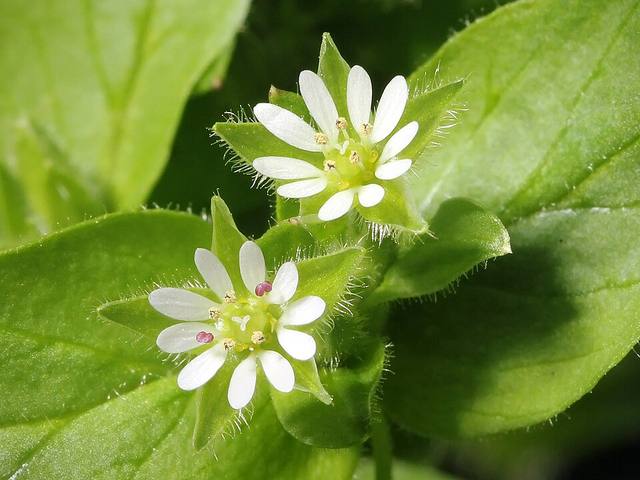
A low, spreading annual weed with small oval leaves and tiny white star flowers. It forms soft green mats in cool, damp weather and is easy to pull, so it is a weed of beds and lawns, not a threat.
Not on the ASPCA's list: keep it out of reach of pets.
Care
Light
Part sun
Likes cool light shade or sun with moist soil. It dies back in strong summer heat and dry weather, so shaded beds are its best home.
Water
About every 5 days in the growing season, every 7 in the cool season
It grows on rain in cool, moist weather. In hot, dry weather it wilts and dies, which ends the plants for the year. It likes damp beds and watered lawns.
Not needed: it grows where soil stays moist and cool
Humidity
Medium humidity
Does best in cool, humid weather.
Temperature
5 to 20 °C (41 to 68 °F)
Grows best at 5 to 20 °C (41 to 68 °F). It grows in winter in mild areas and is hit by frost below about -10 °C (14 °F) when it is old.
Soil
Rich, moist soil, especially a freshly dug bed. It prefers soil with plenty of nitrogen and drainage, and avoids dry sandy ground.
Feeding
Do not feed it. It likes rich beds. If it is out of control, check you are not over-feeding the soil.
Repotting
Nothing to repot. It is shallow-rooted and easy to pull, and is a one-year plant.
Pruning
Hand pull or hoe it before it flowers, which can be within 5 weeks of germinating. Pull the whole mat and shake off the soil. Dry it in the sun or bin it, because pieces can re-root.
Propagation
It spreads only by seed, and one plant can make hundreds that sprout all year. Remove plants before flowers turn to seed. To grow it for salads, sow seed in cool weather in a damp spot.
Size
5 to 40 cm (2 to 16 in)
Fast growing
Outdoors
USDA zones 4 to 10
Grows in vegetable beds, lawns and borders in most temperate gardens. It appears in autumn and spring when soil is cool and moist.
Eating
Young leaves and tips
Do not pick a lookalike. Scarlet pimpernel and some spurges are not safe to eat. Pick only from clean ground and be sure of the plant first.
Common problems
Light green mats covering a bed
Chickweed spreading
Pull it by hand while soil is damp, before it sets seed. Cover bare soil with mulch.
It flowers and sets seed in weeks
Fast life cycle
Weed every 2 to 3 weeks in spring and autumn. Pulling before flowering matters most.
It re-roots after weeding
Stems left lying on damp soil
Do not leave pulled plants on the bed. Take them away or dry them first.
Not sure it is chickweed
Look-alike plants such as scarlet pimpernel or spurge
Check for a single line of hairs on the stem and tiny white petals split almost to the base.
Thick mat in a vegetable bed smothers seedlings
Weed competing with crops
Weed between rows weekly. Mulch to block light.
Did you know?
It can flower and make seed within about 5 weeks of sprouting, and it can grow and set seed in every month of the year in mild climates.
General care information for a typical plant. Conditions in your home or garden may need a different rhythm.
Not sure what your plant is?
Identify a plant from a photoSee this guide in the appKagn Plants also keeps your own plants with watering reminders, and its plant doctor reads what is wrong with one.
Updated 22 November 2026.