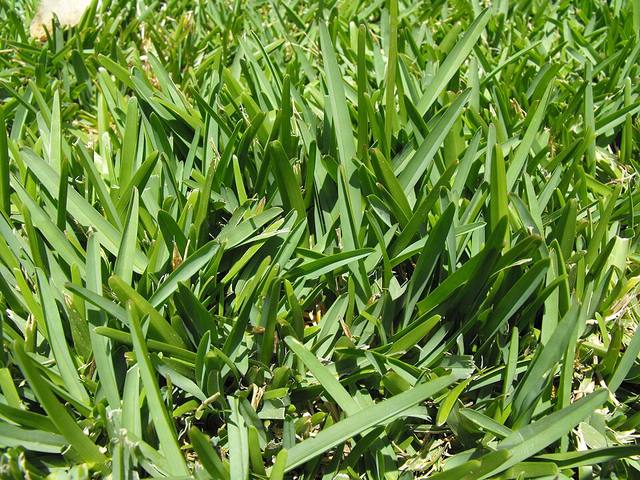
Photo: Stickpen · Public domain · Wikimedia Commons

St Augustine grass
Stenotaphrum secundatum
Also called Buffalo grass (Australia), Charleston grass
Lawn weed · Family Poaceae · Native to Tropical Americas, West Africa and Caribbean
A coarse, wide-bladed grass that spreads by creeping above-ground stems. It is grown as a warm-climate lawn but can invade flower beds. Keep it in a lawn, remove it from beds.
Not on the ASPCA's list: keep it out of reach of pets.
Care
Light
Part sun
Does well in full sun to moderate shade, one of the most shade-tolerant warm-season grasses.
Water
About every 7 days in the growing season, every 14 in the cool season
Water deeply once a week in warm weather, 2 to 3 cm (1 in) of water. It likes warm, humid soil and wilts in drought. It goes dormant in cool weather, so water about every 2 weeks.
Water when the lawn goes blue-grey or footprints stay
Humidity
Medium humidity
Likes warm, humid air, including coastal areas.
Temperature
22 to 35 °C (72 to 95 °F)
Grows best at 22 to 35 °C (72 to 95 °F). Frost browns it and it is damaged below about -3 °C (27 °F).
Soil
Fertile, well-drained soil from sand to clay, pH 6 to 7.5. It tolerates salt and brief shade but not compacted, cold or very wet soil.
Feeding
Every 6 weeks in the growing season
On a lawn, feed every 6 to 8 weeks in the growing season. Too much nitrogen builds thatch.
Repotting
Nothing to repot. To keep it from beds, dig an edge 10 cm (4 in) deep around the lawn.
Pruning
To keep it out of beds, cut runners back and dig out roots, which grow shallow. In a lawn, mow high at 7 to 10 cm (3 to 4 in).
Propagation
Spreads by runners, and lawns are laid from sod or plugs. Seed is rarely available. To remove from a bed, dig out the runners and roots.
Size
8 to 15 cm (3 to 6 in)
Fast growing
Outdoors
USDA zones 8 to 11
Grows only in warm climates, mainly the southern US, Australia and South Africa. It browns in a frost. In cooler areas it is not grown.
Common problems
Runners invade beds
Creeping stems and roots
Dig an edging trench and remove runners each month in summer.
Yellow patches in cool weather
Chinch bugs or dormancy
Check for bugs by pushing a bottomless can into the grass. Treat if found. Otherwise wait for warmth.
Brown circles in the lawn
Gray leaf spot or take-all root rot
Mow high, water in the morning and avoid heavy nitrogen.
Thin grass in shade
Too little light
Mow higher and reduce foot traffic. In deep shade use a ground cover.
Pulling it out leaves bare runners
Roots break and regrow
Dig deep along each runner, remove all pieces and cover bare soil with mulch.
Did you know?
Because it spreads by runners and rarely makes viable seed in cultivation, most St Augustine lawns are planted from sod or plugs rather than sown.
General care information for a typical plant. Conditions in your home or garden may need a different rhythm.
Not sure what your plant is?
Identify a plant from a photoSee this guide in the appKagn Plants also keeps your own plants with watering reminders, and its plant doctor reads what is wrong with one.
Updated 22 November 2026.