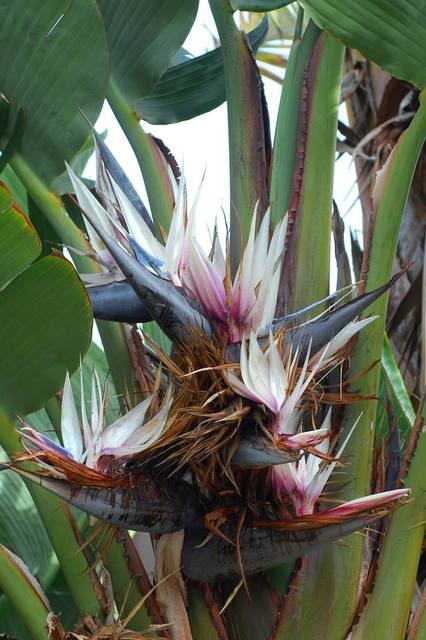
Photo: Eric in SF · CC BY-SA 3.0 · Wikimedia Commons

Giant white bird of paradise
Strelitzia nicolai
Also called White bird of paradise, Natal banana, Wild banana
Houseplant · Family Strelitziaceae · Native to Eastern South Africa and Mozambique
A tall, banana-like plant with huge paddle leaves that can fill a room. It is a showy indoor tree but needs space and bright light.
The ASPCA lists a close relative, bird of Paradise Flower (Strelitzia reginae), as toxic to cats and dogs: treat this plant the same.
Care
Light
Full sun
Needs bright light with several hours of direct sun. Low light gives weak, leaning growth. Leaves split along the veins in wind or dry air, which is normal.
Water
About every 10 days in the growing season, every 21 in the cool season
Water deeply in spring and summer, then let the top dry. Water less in winter. It is a thirsty plant in summer but rots in cold, wet soil.
Water when the top 5 cm (2 in) of soil is dry
Humidity
Medium humidity
Normal home humidity is fine. Brown tips show dry air or salts in water.
Temperature
15 to 30 °C (59 to 86 °F)
Keep at 15 to 30 °C (59 to 86 °F). Leaves are damaged below about 5 °C (41 °F).
Soil
Rich, well-draining potting mix with grit or perlite. Use a heavy, wide pot with drainage holes, because it gets tall and top-heavy.
Feeding
Every 4 weeks in the growing season
Feed every 4 weeks in spring and summer with a balanced fertiliser. Stop in winter.
Repotting
Every 3 years
Repot every 3 years or less often, in spring, once roots fill the pot. Go up one size, with a heavy pot for stability.
Pruning
Cut old, yellow or torn leaves at the base. Remove spent flower stems, which are rare indoors.
Propagation
Divide a large clump in spring with a sharp knife, keeping roots on each piece. Seed takes years. Expect a slow recovery after division.
Size
150 to 400 cm (59 to 157 in)
Medium growth
Outdoors
USDA zones 9 to 11
Grows outdoors in full sun in frost-free or mild climates, as a tall screen. Give 2 to 3 m (6 to 10 ft) of space and shelter from strong wind.
Common problems
Split, shredded leaves
Wind, dry air or draughts
Normal; move it out of wind, and trim only dead edges.
Yellow lower leaves
Age or overwatering
Remove old leaves; check the soil is not soggy.
Brown, crispy edges
Dry air or thirst
Water deeply and raise humidity.
Leaning, weak stems
Low light
Move to a brighter spot and turn it each week.
Scale or mealybugs on stems
Sap-sucking insects
Wipe with a damp cloth and alcohol, and repeat weekly.
Did you know?
It can reach 6 m (20 ft) tall outdoors and has a woody, banana-like trunk. White flowers with a blue-grey tongue appear only on well-lit, mature plants.
General care information for a typical plant. Conditions in your home or garden may need a different rhythm.
Not sure what your plant is?
Identify a plant from a photoSee this guide in the appKagn Plants also keeps your own plants with watering reminders, and its plant doctor reads what is wrong with one.
Updated 22 November 2026.